
Grovy total media coverage to date (July 31-October 31, 2025)
September 9, 2025
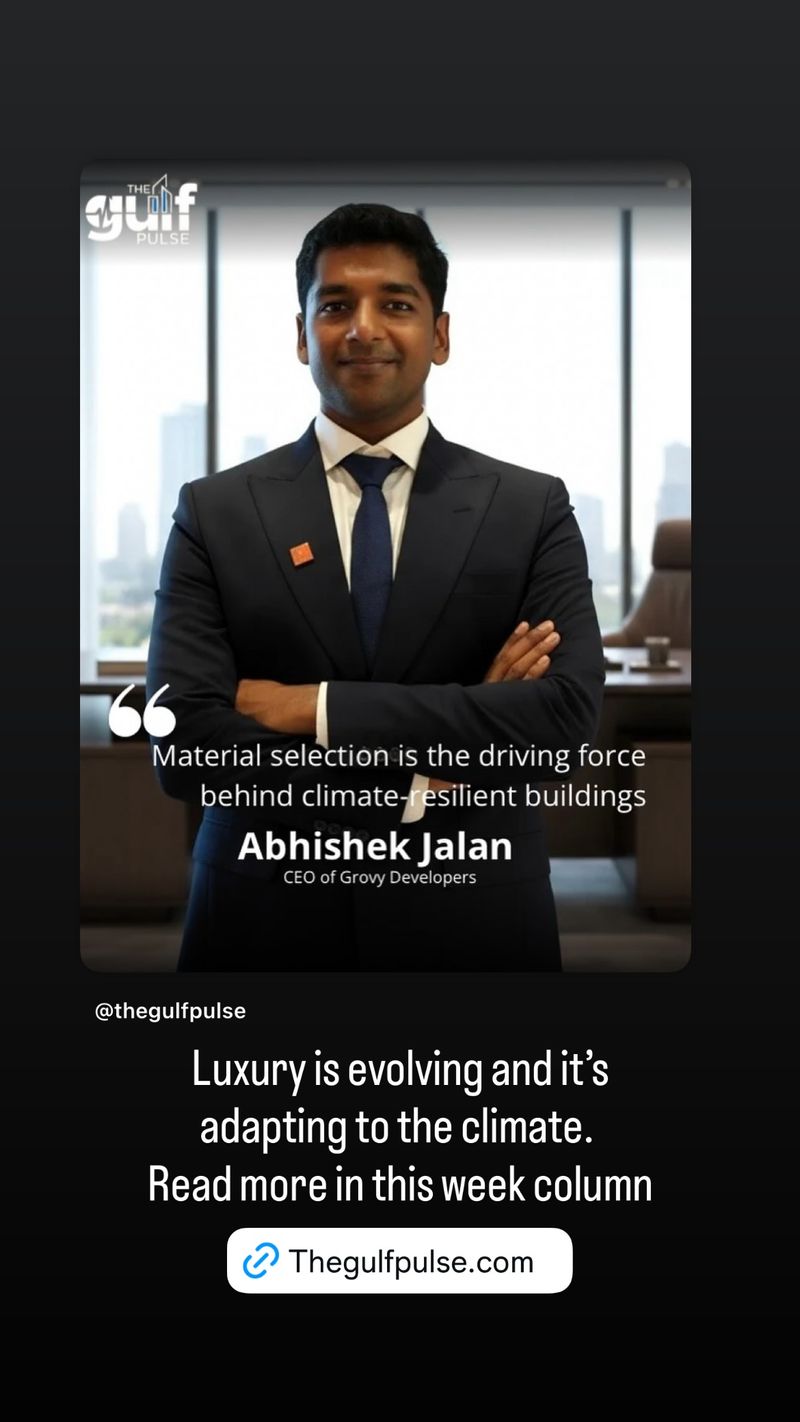
The Gulf Pulse - Instagram Story
Can Dubai’s luxury projects be built to resist climate changes?
- Impact
-
75
- Instagram followers
-
75
- Brand mentions
-
1
- Coverage:
- Earned
- Editorial:
- Opinion
- Tone:
- Positive
As the UAE witnesses more intense temperatures and occasional severe rainfall, luxury developers are rethinking how they can build and make their developments climate-resilient.
The main driving force behind climate-resilient buildings is material selection. Well-insulated and efficient building cladding systems can reduce indoor temperatures by up to 30 percent, which in turn reduces AC consumption, resulting in lower cooling costs. Aluminium and glass structures require low U-value glazing systems. A lower U-value means better thermal performance and less heat entering the building, resulting in lower energy consumption and more comfortable indoor temperatures.
The Dubai Building Code requires developers to use materials with a high Solar Reflectance Index (SRI); the reflective or light-coloured finishes can reduce the surface temperatures of the building by 20°C, and reduce the absorption of heat by the entire building. Lower surface temperatures provide a more comfortable indoor environment. For example, black materials have low SRI and high emittance, and white materials have high SRI and low emittance. This means that a black surface will accumulate more heat, and the surface heats up, while a white surface will reflect heat, and the surface will cool.
Complete building systems The emphasis is not only on the different options of material but also on complete building systems that can be retrofitted to suit the desert environment. For instance, GRP (Glass Reinforced Plastic) water tanks have better insulating quality, and consequently, the rooftop water stays cooler with less energy loss. At the same time, the recovered water condensate from air-conditioning systems is increasingly being used for watering landscapes – an innovative application of sustainability in arid climates.
Architectural design is also important when it comes to climate-resilient development. Passive cooling techniques, such as shaded facades and optimized window placement, can reduce heat significantly. One principle some developers follow during this design process is Vastu or Feng Shui. Research shows that reducing west-facing windows can lower the cooling demand by up to 15 percent. Some projects include solar panels on the roofs, which not only generate energy for the benefit of the building but also provide shade to cool roof surfaces.
Lastly, the incorporation of climate-responsive strategies in city planning makes a significant positive impact on the overall quality of life. Small community designs with cooled outdoor walkways are effective methods to lessen the urban heat island effect and secure viability in the long run.
| Market | Consumer |
|---|---|
| Scope | Regional |
+971 52 167 8103
nicola@budgiepr.com
budgiepr.com