
Energy Savings Opportunity Scheme (ESOS) and Streamlined Energy and Carbon Reporting (SECR)
Energy Savings Opportunity Scheme (ESOS) and Streamline Carbon Reporting brings together a curated set of informational infographics from TEAM Energy, designed to support clear understanding of ESOS, SECR and how compliance supports organisations. The lookbook provides journalists and stakeholders with accessible, evidence-based visuals that explain complex concepts, regulatory contexts and best‑practice approaches.
TEAM Energy
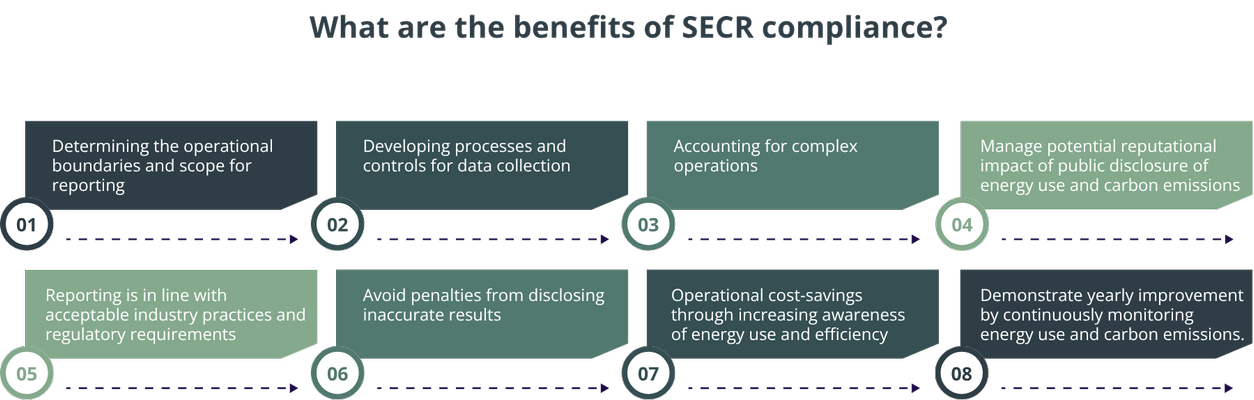
Infographic titled “What are the benefits of SECR compliance?” outlining eight benefits including defining reporting boundaries, improving data collection processes, managing complex operations and reputational risk, meeting regulatory requirements, avoiding penalties, achieving cost savings through energy efficiency, and demonstrating continuous improvement.
Credit: TEAM Energy
TEAM Energy
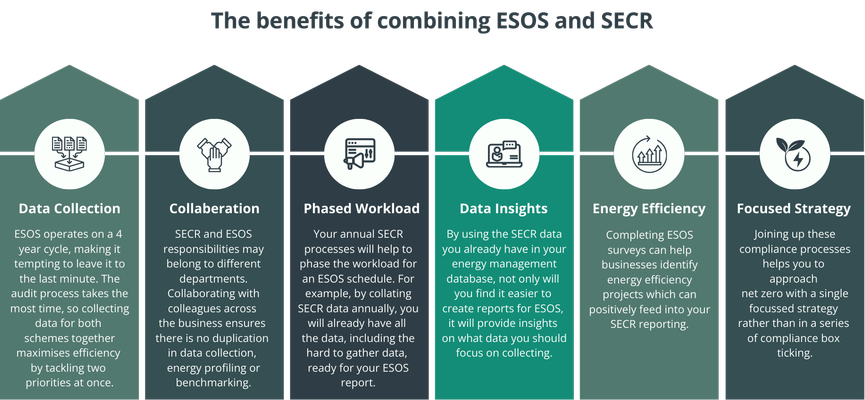
Infographic outlining the benefits of combining ESOS and SECR, including data collection efficiency, collaboration across departments, phased workload, data insights, energy efficiency improvements, and a more focused net zero strategy.
Credit: TEAM Energy
TEAM Energy
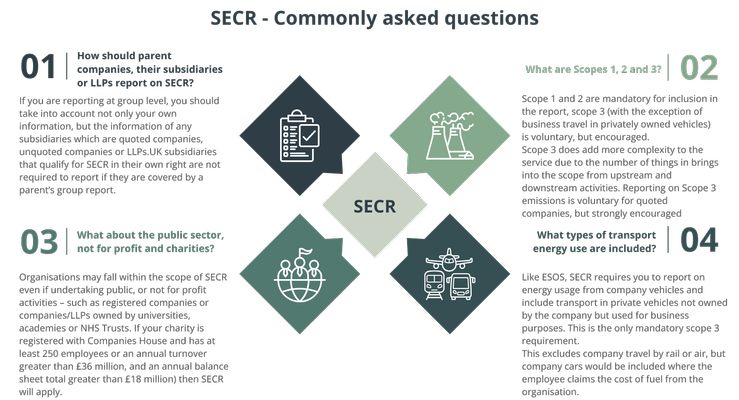
Infographic titled “SECR – Commonly asked questions” explaining reporting requirements, including group-level reporting for parent companies and subsidiaries, Scope 1, 2 and voluntary Scope 3 emissions, applicability to public sector and charities, and transport energy use such as company vehicles and business travel.
Credit: TEAM Energy
TEAM Energy
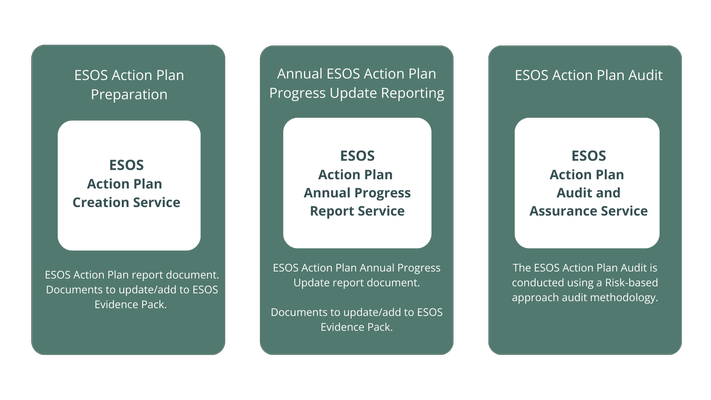
Graphic showing three ESOS Action Plan services: action plan preparation, annual progress reporting, and audit and assurance services.
Credit: TEAM Energy
TEAM Energy
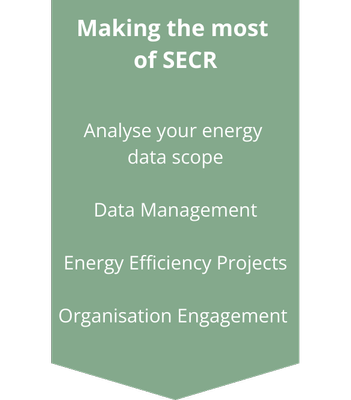
Graphic highlighting ways to make the most of SECR, including analysing energy data scope, improving data management, delivering energy efficiency projects, and increasing organisational engagement.
Credit: TEAM Energy
TEAM Energy
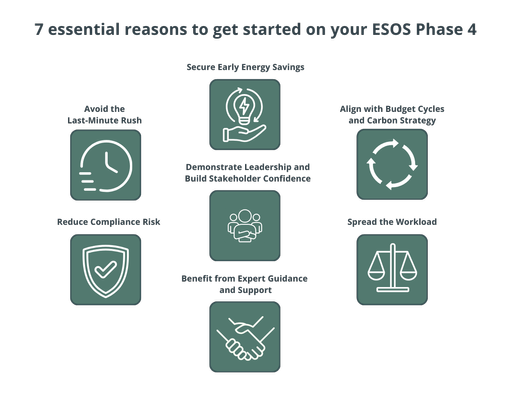
Infographic highlighting seven essential reasons to start ESOS Phase 4 early, including securing early energy savings, avoiding last-minute rush, reducing compliance risk, aligning with budget cycles and carbon strategy, spreading workload, demonstrating leadership, and benefiting from expert support.
Credit: TEAM Energy
TEAM Energy
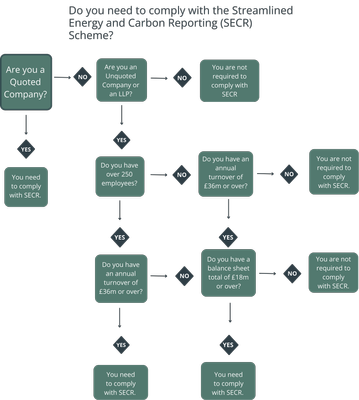
Flowchart showing how to determine if a business must comply with SECR, based on company type, employee numbers, turnover, and balance sheet total.
Credit: TEAM Energy
TEAM Energy
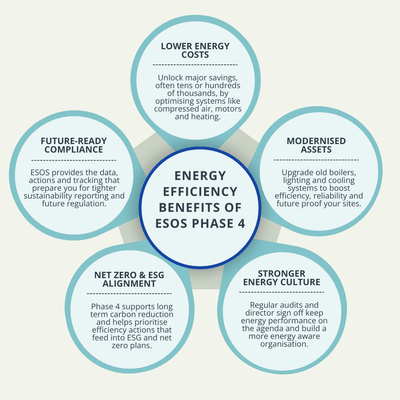
Illustration showing the energy efficiency benefits of ESOS Phase 4, including lower energy costs, modernised assets, stronger energy culture, net zero and ESG alignment, and future-ready compliance.
Credit: TEAM Energy
TEAM Energy
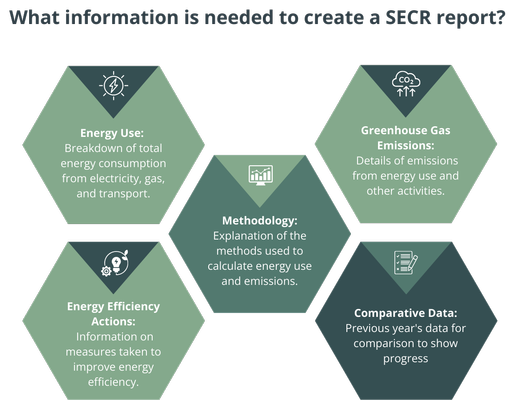
Infographic showing the key information needed to create a SECR report, including energy use, greenhouse gas emissions, methodology, energy efficiency actions, and comparative data.
Credit: TEAM Energy
TEAM Energy
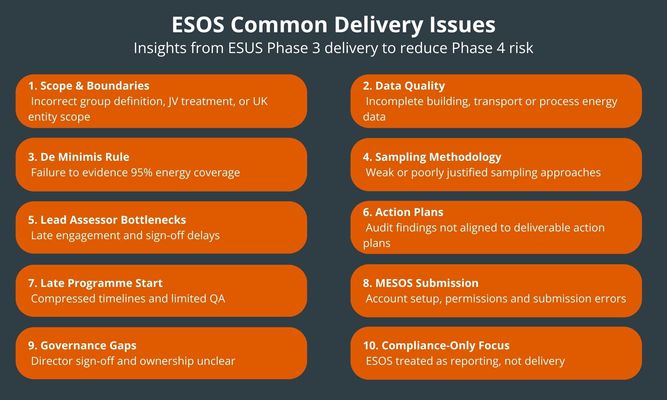
Infographic outlining common ESOS delivery issues, including scope definition errors, poor data quality, weak sampling methods, action plan gaps, and late programme starts.
Credit: TEAM Energy
TEAM Energy
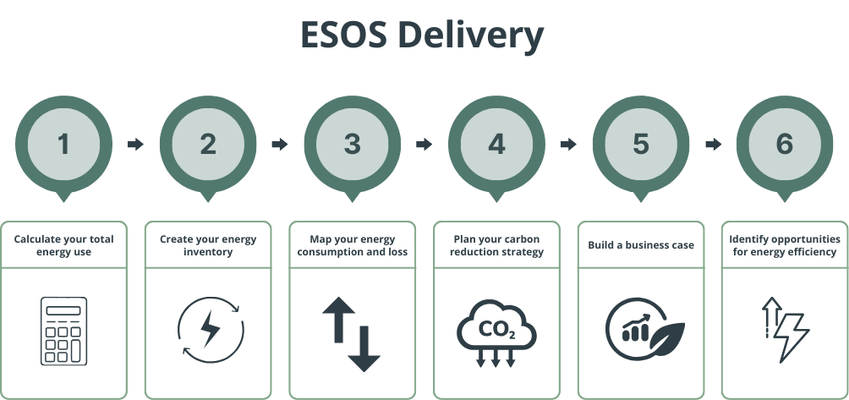
Infographic outlining the ESOS delivery process, including calculating energy use, creating an energy inventory, mapping consumption, planning carbon reduction, building a business case, and identifying efficiency opportunities.
Credit: TEAM Energy
TEAM Energy
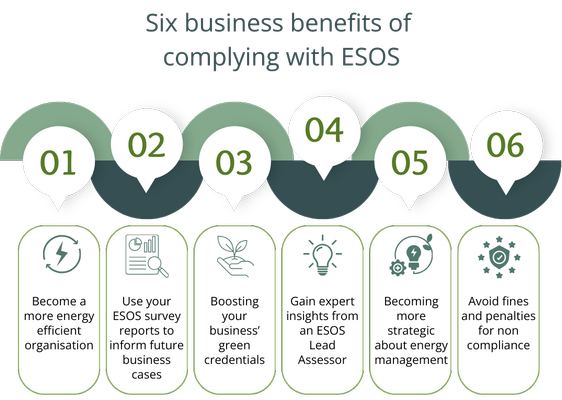
Infographic showing six business benefits of complying with ESOS, including improved energy efficiency, better use of audit data, stronger sustainability credentials, expert insights, more strategic energy management, and avoiding fines.
Credit: TEAM Energy
TEAM Energy
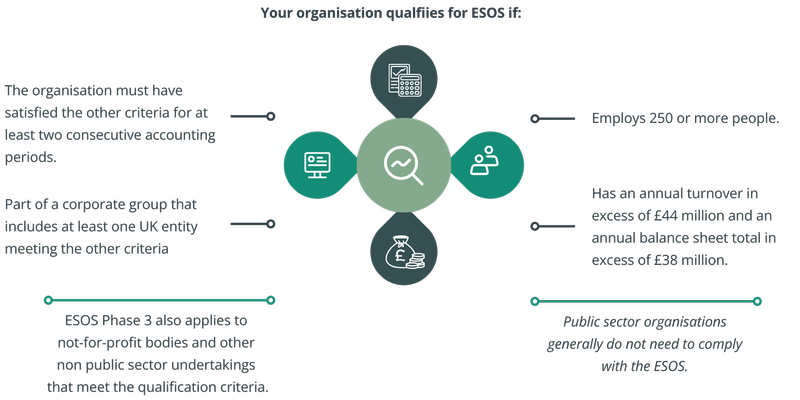
Infographic showing the criteria for qualifying for ESOS, including organisations with 250 or more employees, annual turnover above £44 million and balance sheet above £38 million, part of a qualifying corporate group, or meeting criteria over two consecutive accounting periods, with note that most public sector organisations are exempt.
Credit: TEAM Energy
TEAM Energy
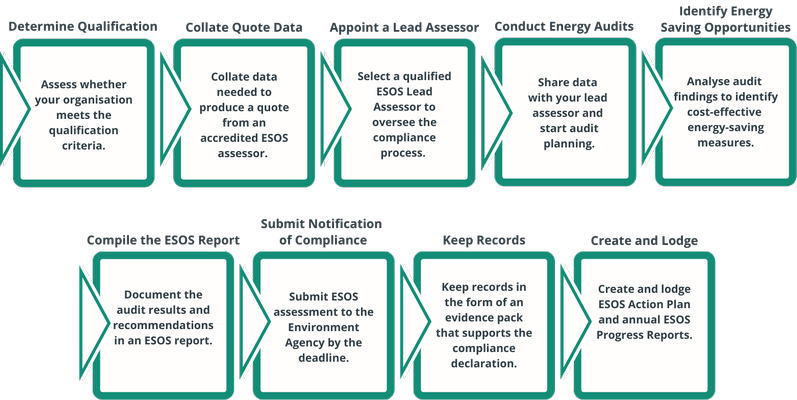
Infographic outlining the key steps for ESOS compliance, including determining qualification, collating quote data, appointing a lead assessor, conducting energy audits, identifying energy saving opportunities, compiling the ESOS report, submitting notification of compliance, keeping records, and creating ESOS action plans and progress reports.
Credit: TEAM Energy
TEAM Energy
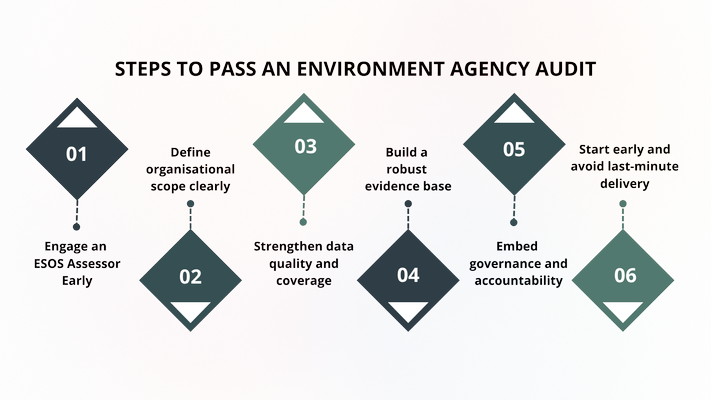
A six-step infographic titled “Steps to Pass an Environment Agency Audit.” The infographic uses diamond-shaped markers labelled 01 to 06, arranged horizontally. Each step outlines a key action: engage an ESOS assessor early; define organisational scope clearly; strengthen data quality and coverage; build a robust evidence base; embed governance and accountability; and start early to avoid last-minute delivery.
Credit: TEAM Energy