
Building Performance, Audits, Surveys and Inspections
Building Performance, Audits, Surveys and Inspections brings together a curated set of informational infographics from TEAM Energy, designed to support clear understanding of the Energy Performance of Buildings regulations, Energy Performance Certificates (EPCs), MEES, Display Energy Certificates (DECs) and Air Conditioning Inspection Reports (ACIR). The lookbook provides journalists and stakeholders with accessible, evidence-based visuals that explain complex concepts, regulatory contexts and best‑practice approaches.
TEAM Energy
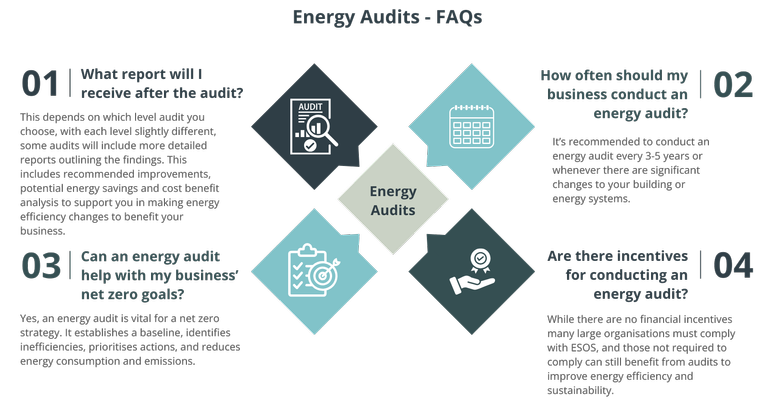
Infographic titled “Energy Audits – FAQs” presenting four common questions: what report is received after an audit, how often audits should be conducted, whether audits support net zero goals, and if incentives are available, with brief answers covering detailed reporting, a recommended 3–5 year audit cycle, net zero benefits, and ESOS compliance considerations.
Credit: TEAM Energy

TEAM Energy
Five-step infographic on preparing a commercial property portfolio for future MEES tightening. Steps include understanding EPC ratings and high-risk assets, assessing future compliance risks, prioritising energy efficiency investment, planning building improvements strategically, and strengthening energy data visibility to reduce costs, emissions and compliance risk.
Credit: TEAM Energy
TEAM Energy
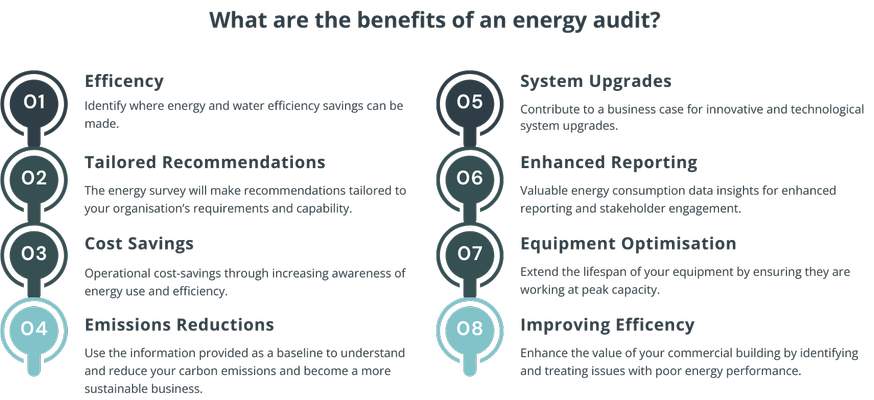
Infographic outlining the benefits of an energy audit, including improved efficiency, tailored recommendations, cost savings, emissions reduction, system upgrades, enhanced reporting, equipment optimisation, and overall improvement in building energy performance.
Credit: TEAM Energy
TEAM Energy
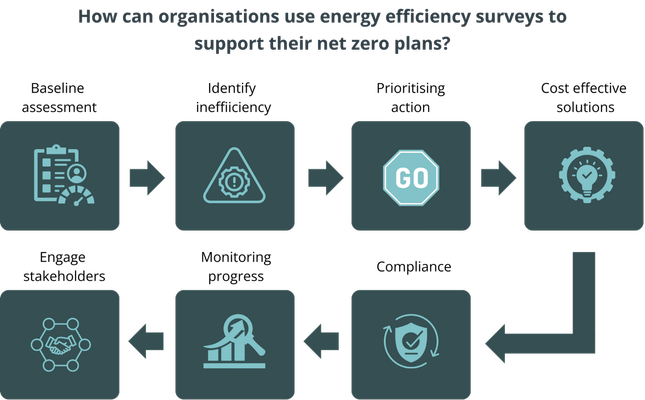
Infographic illustrating how organisations use energy efficiency surveys to support Net Zero plans, showing a step-by-step process with icons for assessment, identifying issues, go/no-go decision making, implementation, continuous improvement, performance monitoring, analysis, and stakeholder collaboration.
Credit: TEAM Energy
TEAM Energy
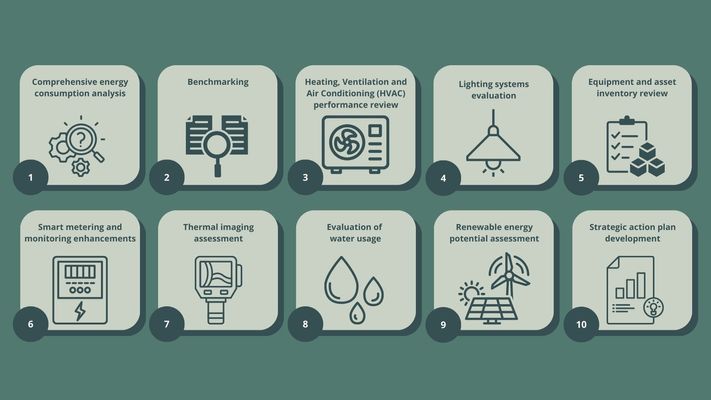
Infographic showing ten steps to improve building performance through an energy audit, including energy consumption analysis, benchmarking, HVAC review, lighting evaluation, equipment inventory, smart metering, thermal imaging, water usage assessment, renewable energy potential, and development of a strategic action plan.
Credit: TEAM Energy
TEAM Energy
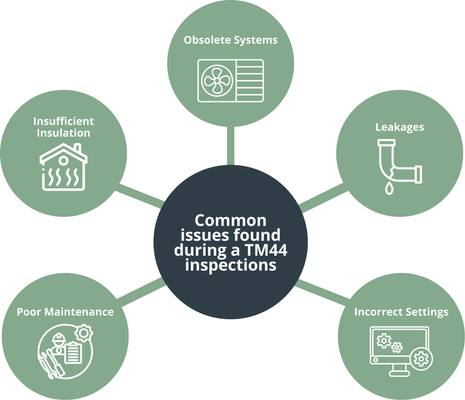
Infographic showing common issues identified during a TM44 inspection, including obsolete air conditioning systems, refrigerant leakages, insufficient insulation, poor maintenance, and incorrect system settings.
Credit: TEAM Energy
TEAM Energy
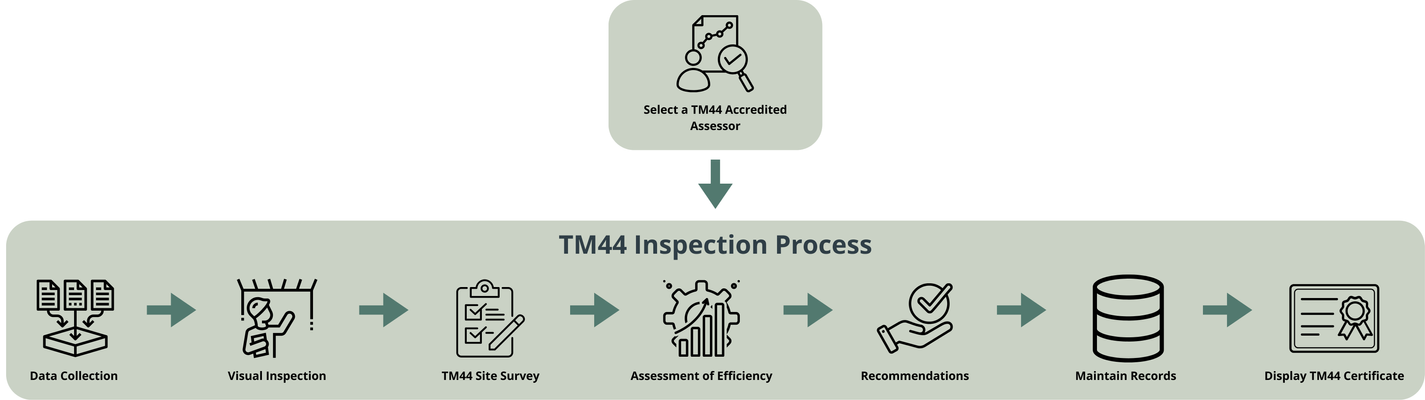
Infographic showing the TM44 inspection process, starting with selecting an accredited assessor and progressing through data collection, visual inspection, site survey, efficiency assessment, recommendations, record maintenance, and displaying the TM44 certificate.
Credit: TEAM Energy
TEAM Energy
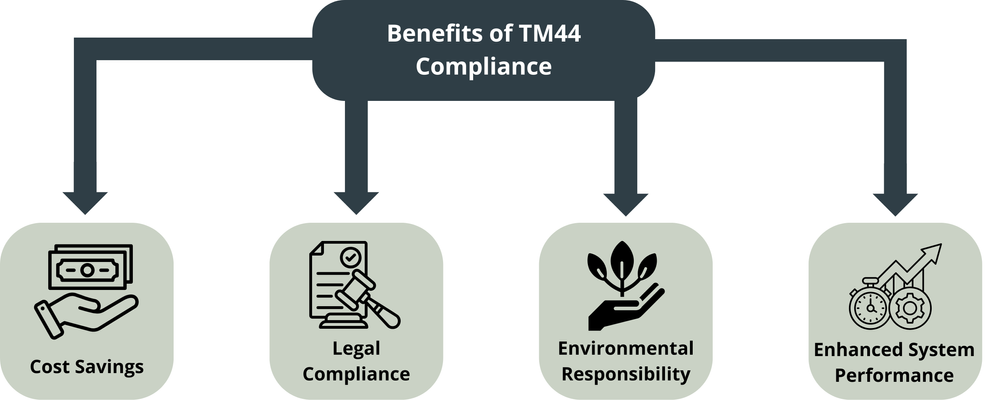
Infographic illustrating the benefits of TM44 compliance, including cost savings, legal compliance with UK regulations, improved environmental responsibility, and enhanced system performance.
Credit: TEAM Energy
TEAM Energy
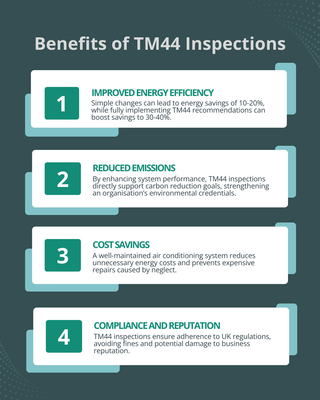
Infographic showing four benefits of TM44 inspections: improved energy efficiency with 10 to 40 percent savings, reduced carbon emissions, lower energy costs through better system maintenance, and compliance with UK regulations to protect business reputation.
Credit: TEAM Energy
TEAM Energy
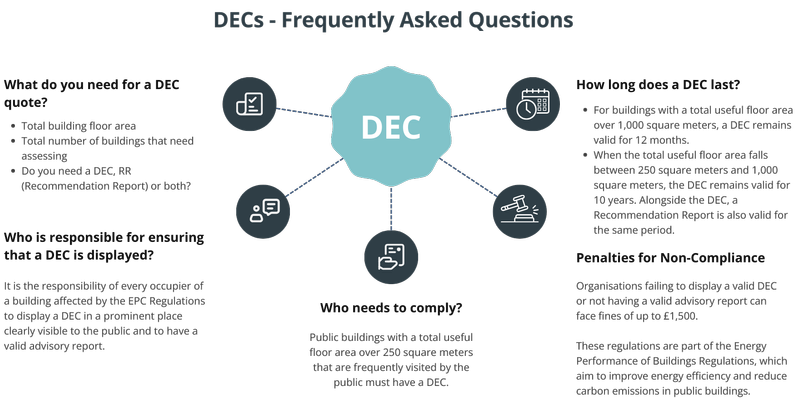
Infographic titled “DECs – Frequently Asked Questions” with a central “DEC” graphic linked to five sections: requirements for a DEC quote (building floor area, number of buildings, and whether a Recommendation Report is needed), responsibility for displaying a DEC (building occupier), who must comply (public buildings over 250m²), duration of a DEC (validity periods based on building size), and penalties for non-compliance (fines up to £1,500).
Credit: TEAM Energy
TEAM Energy
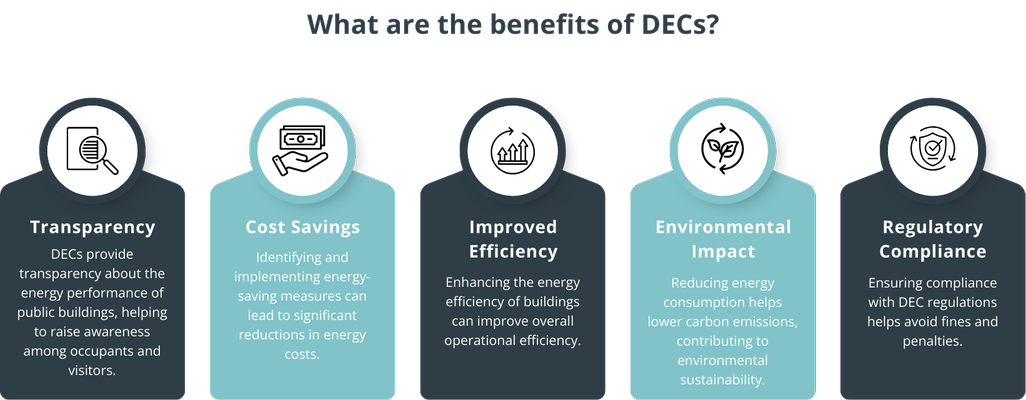
Infographic titled “What are the benefits of DECs?” showing five illustrated sections: Transparency, Cost Savings, Improved Efficiency, Environmental Impact, and Regulatory Compliance. Each section highlights a benefit of Display Energy Certificates, including raising awareness of energy performance, reducing costs, improving operational efficiency, lowering carbon emissions, and helping organisations meet regulatory requirements.
Credit: TEAM Energy
TEAM Energy
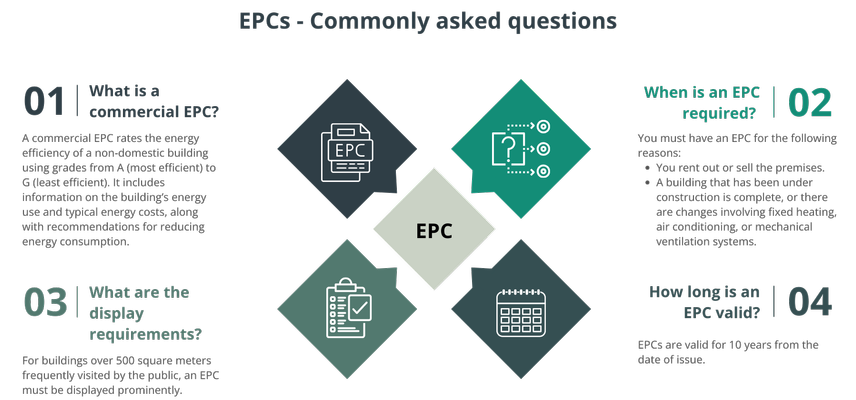
Infographic of common commercial EPC questions, covering what a commercial EPC is, when it is required, display requirements, and how long an EPC is valid.
TEAM Energy
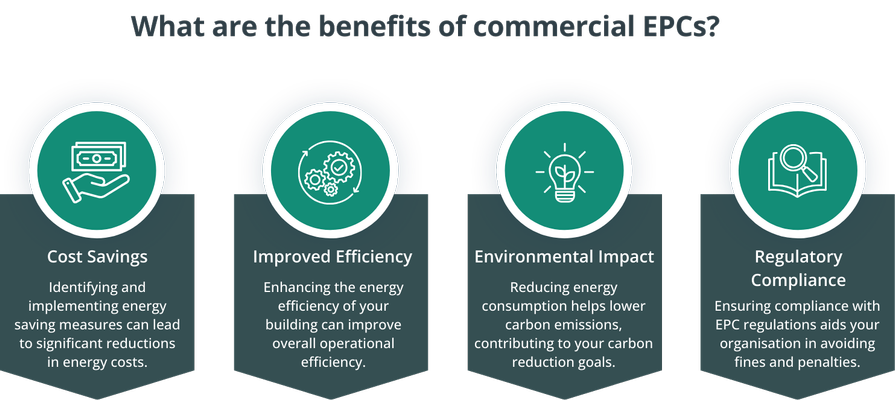
Infographic outlining the benefits of commercial EPCs, including cost savings, improved energy efficiency, reduced environmental impact, and regulatory compliance.
Credit: TEAM Energy
TEAM Energy
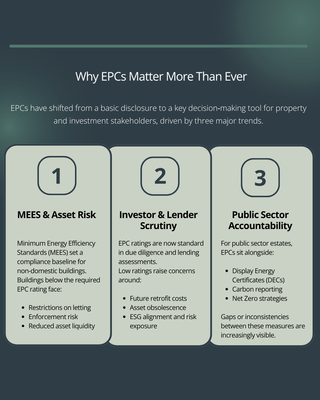
Infographic explaining why EPCs matter more than ever, highlighting MEES compliance and asset risk, investor and lender scrutiny, and public sector accountability.
Credit: TEAM Energy
TEAM Energy
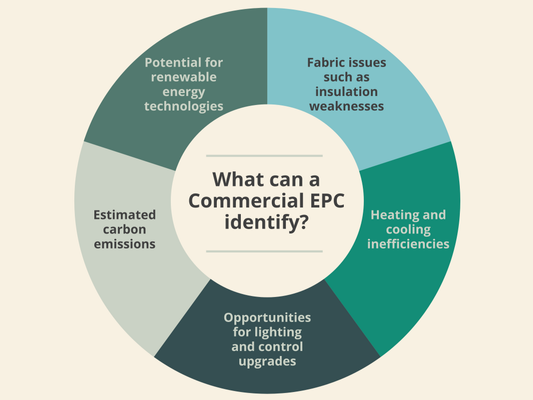
Circular infographic showing what a commercial EPC can identify, including fabric insulation issues, heating and cooling inefficiencies, lighting and control upgrade opportunities, estimated carbon emissions, and renewable energy potential.
Credit: TEAM Energy
TEAM Energy
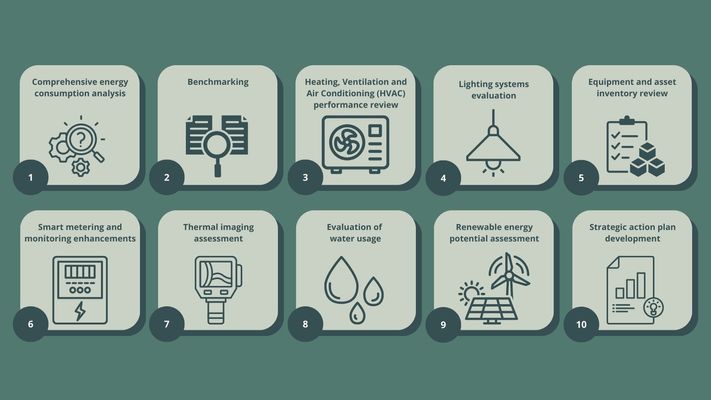
Infographic showing ten steps of an energy audit, including energy consumption analysis, benchmarking, HVAC review, lighting evaluation, smart metering, thermal imaging, water usage assessment, renewable energy potential, and action planning.”
Credit: TEAM Energy