Vienna’s UNESCO-Listed Intangible Cultural Heritage Coffee houses, wine taverns, and the city’s beloved sausage stands
Published:
Read Time: 4 mins
Vienna is a city where culture extends beyond opera stages and imperial palaces. Some of its most enduring traditions are found in everyday rituals, recognised by UNESCO as part of the Intangible Cultural Heritage of Humanity. The Viennese coffee house, the wine tavern (Heuriger), and the sausage stand (Würstelstand) are as much a part of the city’s cultural identity as St Stephen’s Cathedral.
What makes them even more appealing is their accessibility. These experiences require no advance reservation, no planning ahead - just step into a coffee house, vineyard courtyard, or brightly lit kiosk to share in traditions that have shaped Viennese life for centuries.
The Coffee House Tradition
Stepping into a Viennese coffee house is like pressing pause on the modern world. Declared intangible cultural heritage by UNESCO in 2011, these houses are spaces where people linger with a slice of strudel and a stack of newspapers at a marble-topped table. The atmosphere has seen generations of artists and writers take refuge here, from Stefan Zweig to Peter Altenberg.
Each coffee house carries its own character. Café Jelinek, tucked just off Mariahilfer Strasse, charms with its woodburner and home-made Guglhupf, a traditional yeast-leavened cake from Central Europe. At Café Sperl, established in 1880, time seems frozen - the original décor and billiard tables accommodate hours of conversation. Then there is Café Hawelka, one of Vienna's most legendary cafés, not far from Stephansplatz. Its distinctive charm has made Café Hawelka a popular meeting place for famous people from the worlds of art and culture, such as Hans Moser, Udo Jürgens or Andy Warhol. The Buchteln pastries are a must!
The Viennese Heuriger
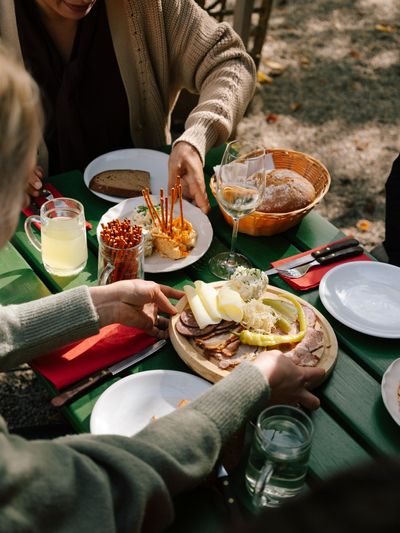
Equally integral to Vienna’s cultural life are its Heuriger wine taverns, marked by pine branches hung above their entrances and the word Ausg’steckt signalling they are open. Here, wine from the most recent harvest is served in rustic courtyards and leafy vineyards, often accompanied by platters of cold cuts and folk songs.
The best-known taverns can be found in the traditional districts of Grinzing and Nussdorf, where rows of wooden benches fill with locals and visitors alike. For a quieter experience, the intimate wine taverns in Mauer are perfect. A particular favourite is the Steinklammer Wine Tavern. Here, guests can enjoy the rustic and cosy restaurant, pressing room, and barn at the heuriger, run by the Steinklammer family of organic vintners. With 300 years of tradition, home-cooked dishes, and a romantic garden, it offers a welcoming setting for all who visit.
The vineyards of Stammersdorf and Sievering feel as if they belong to another century. These traditional wine-growing villages, on the north-eastern outskirts of Vienna, are home to a remarkable array of authentic heurige, where visitors can enjoy both the wine and the convivial atmosphere. At Ausblick Wien, for example, the emphasis is on quality, with award-winning wines accompanied by simple cold dishes such as Brettljause or spreads, all served with panoramic views over the city.
Sausage Stands: Everyday Icons
In 2024, Vienna’s sausage stands joined the coffee houses and wine taverns on UNESCO’s intangible cultural heritage list. More than street food, they are social institutions - meeting places where bankers rub shoulders with students, and the question “süss oder scharf?” (sweet or spicy?) always refers to mustard.
The choice of sausage is vast: from the smoky Käsekrainer, a local invention with molten cheese inside, to classics like the Bratwurst and Bosna. Side orders include everything from home-made sauces to truffled potatoes, with drinks ranging from raspberry soda to draft beer or champagne.
Among the city’s best-known kiosks is the legendary Würstelstand am Hohen Markt, perched on a traffic island in the old town, famed for its late-night crowds. Bitzinger, with locations at Albertinaplatz and near the Giant Ferris Wheel, is beloved for its Käsekrainer and Bosna, often enjoyed with a glass of wine or beer. For something fiery, Zum scharfen René is renowned for its chilli mixtures and award-winning curry sauce, while the Kaiserzeit Sausage Stand elevates tradition with dishes like goulash soup and blood sausage.
Those seeking history should visit Würstelstand LEO, Vienna’s oldest stand, where the legendary “Big Mama” - a giant cheese sausage - is served.
Coffee houses, wine taverns, and sausage stands are integral to Vienna because they are part of daily life. Visitors can experience them without pre-planning, simply by arriving and joining in. From a quiet cup at Café Sperl to a glass of wine at a vineyard terrace, or a late-night sausage from Bitzinger, these traditions offer an authentic insight into the city’s culture: informal, enduring, and open to everyone.
Ends
Editors notes
Notes to editor
For more information on Vienna, please visit www.wien.info/en
For media and press enquiries please contact: vienna@lemongrassmarketing.com / +44 (0) 1865 237990
About Vienna Tourist Board
Austria’s capital of Vienna is consistently ranked as the city with the highest quality of life for the 3rd consecutive year by The Economist Intelligence Unit, providing its residents, expatriates and visitors with high security, seamless public transportation, a wide variety of cultural and arts institutions, and a staggering 53% of the city serving as public green space.
The Vienna Tourist Board, founded in 1955, is the official destination marketing service provider for the tourism sector of the city. It promotes the city worldwide and provides many services, tips, resources and information for Viennese businesses, residents and visitors.
For further information, please visit www.b2b.vienna.info
Instagram @Vienna | TikTok @vienna.info Twitter @_vienna_info_ | #ViennaNow