Employers lack confidence in mental health support, new research shows
Published:
Read Time: 3 mins
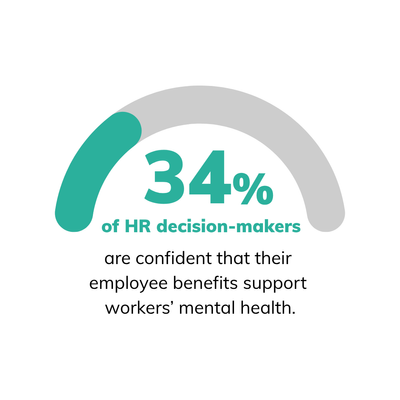
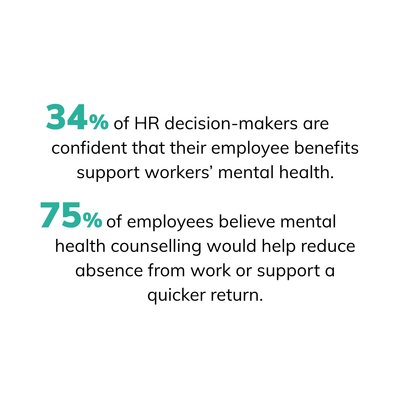
Only 34% of HR decision-makers are confident that their employee benefits support workers’ mental health, according to new research from Health Shield Friendly Society.
Health Shield’s Britain at Work report found that employers estimate each of their employees took an average of 11 days off over the past year. Mental health accounted for 2.4 of those days (22%), second only to sickness or ill health at 4.2 days (38%). Family leave (19%) and physical injury (15%) were also cited as reasons for absence.
Mental health-related absence was higher among younger workers, with under-44s taking an average of three or more days, rising to 5.3 days among 18–27-year-olds, compared with 1.9 days among workers aged over 44.
Three quarters (75%) of employees believe mental health counselling would help reduce absence from work or support a quicker return.
The research was conducted by Censuswide on behalf of Health Shield across 500 UK HR and benefits decision-makers and 2,000 UK employees. It found:
- The most reported challenges to maintaining a healthy work-life balance are high workloads or job demands and family or personal responsibilities (both 30%).
- These are followed by long working hours (29%), difficulty switching off (21%), lack of flexible working (17%) and not enough support from employers (15%).
- Retaining employees (49%), maintaining or improving productivity (47%) and reducing absence (47%) are key reasons for providing employee health benefits.
Paul Shires, director at Health Shield, said: “Mental health challenges often build gradually, affecting how someone feels long before they reach the point of needing time off.
“People shouldn’t have to wait until they are struggling to cope before they can get help. Giving employees access to the right support early can make a meaningful difference to their wellbeing, while helping them remain well and in work.”
The Britain at Work report contains broker insight from Emily Jones, head of workplace wellbeing at Broadstone Financial Solutions. She said: “When mental health is having such a significant impact on the workforce, employers need to understand whether their existing benefits are meeting that need.
“Brokers can help clients identify gaps and build a more targeted approach, ensuring investment is focused on support that employees genuinely need and value.”
Perry Timms, an HR influencer who is founder and chief energy officer of PTHR, added: “Absence is only part of the picture. High workloads, long hours and difficulty switching off can gradually erode people’s capacity to perform, even before they reach the point of taking time away from work.
“Employers need to look at the everyday experience of work and address the pressures that can leave people struggling. Creating healthier ways of working can make a real difference to both wellbeing and performance.”
To read the full Britain at Work Report please visit: www.healthshield.co.uk/britainatwork
Ends
Editors notes
Research methodology:
The research was conducted by Censuswide on behalf of Health Shield Friendly Society among 2,002 UK employees between 27 March and 1 April 2026, and 500 UK HR and Benefits decision-makers at organisations with 100+ employees between 7 and 13 April 2026.
Censuswide is a member of the Market Research Society (MRS) and the British Polling Council (BPC). It is a signatory of the Global Data Quality Pledge and adheres to the MRS Code of Conduct and ESOMAR principles.
About Health Shield Friendly Society
Health Shield is an award-winning friendly society, dedicated to helping businesses stay in the best of health by providing employee health benefits. Founded in 1877 to support the health of railway workers, today the not-for-profit mutual provides employee health benefits to businesses across the UK, covering more than 500,000 people. Its award-winning product offering includes health cash plans and health screening services designed for prevention and early intervention.
For more information visit: https://www.healthshield.co.uk/