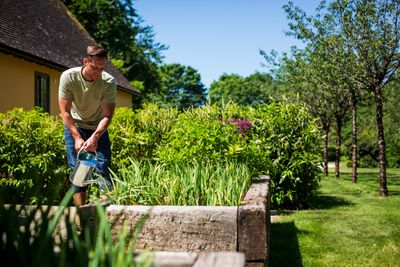
From mossy to magnificent: restoring lawn health this spring
Published:
Read Time: 4 mins
Nothing ruins a bright, sunny spring day quite like noticing the lawn is looking bare and dull. More often than not, moss is the culprit behind patchy, lacklustre grass. What may begin as a few soft green clumps can quickly spread, smothering grass and leaving the lawn looking thin, uneven and tired. Left untreated, moss can soon take over entirely.
The good news is that moss is a symptom - not the root problem. With the right approach, it can be tackled effectively and prevented from returning. Angharad James, Brand Manager at Maxicrop, shares her top tips on how to restore a lawn to a thicker, healthier and moss-free space.
Find the underlying cause
The first step is understanding why moss is growing in the first place. Moss thrives in conditions where grass struggles. Excess moisture caused by overwatering or poor drainage is a common trigger, as is heavy shade, particularly under trees or beside buildings. Compacted soil that restricts root growth, poor air circulation and low soil fertility can also create the ideal environment for moss to establish. Rather than simply removing it, these underlying issues must be addressed - otherwise it becomes an endless cycle.
Improve drainage and circulation
Improving drainage and aeration is one of the most effective long-term prevention strategies. Compacted soil prevents oxygen, water and nutrients from reaching grass roots, while moss flourishes in exactly these conditions. Spiking the lawn with a garden fork or hollow tine aerator, especially in high-traffic areas, can significantly improve airflow and drainage. In more severe cases, hollow tine aeration removes small cores of soil, relieving compaction more effectively. Applying a light top dressing of sand or sandy loam afterwards can further enhance soil structure over time. Regular aeration in spring and autumn helps keep roots strong and reduces moss-friendly conditions.
Adjust watering habits
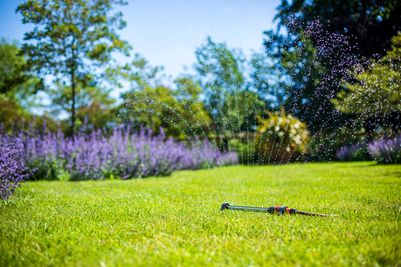
Watering habits also play a crucial role. Overwatering is a common mistake, and frequent shallow watering encourages weak roots and surface moisture - ideal for moss growth. Lawns benefit more from deep, infrequent watering, typically once or twice a week during summer, and ideally before 10am to prevent scorching. Allowing the surface to dry between waterings and improving drainage in persistently wet areas can dramatically reduce the chances of moss returning.
Increase light and air
Light and airflow should not be overlooked either. If shade is contributing to the problem, pruning overhanging trees and thinning dense shrubs can allow more sunlight and air to reach the lawn. While it may not be possible to eliminate shade entirely, even small improvements can strengthen grass. When overseeding, choosing a shade-tolerant grass mix can also help the lawn compete more effectively.
Manually remove moss
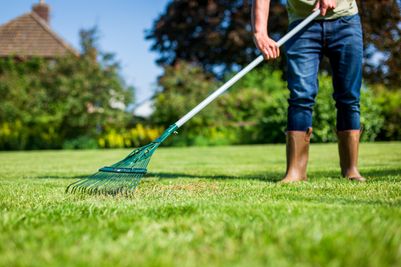
Where moss has already taken hold, physical removal may be necessary. A spring tine rake is suitable for smaller lawns, while a mechanical scarifier is ideal for larger or heavily affected areas. Scarifying lifts out dead moss and thatch, allowing light, water and nutrients to reach the soil surface again. Timing is important, and this process should be carried out during active grass growth in spring or early autumn to allow for quick recovery. Overseeding bare patches afterwards will help prevent moss from re-
establishing.
Treatment for a fast, effective result
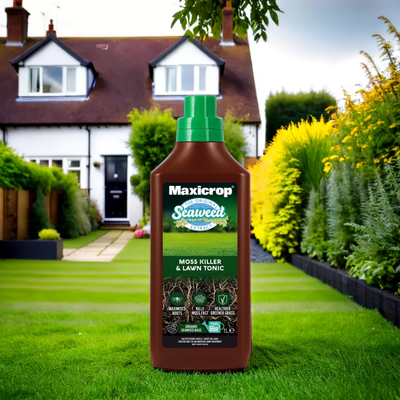
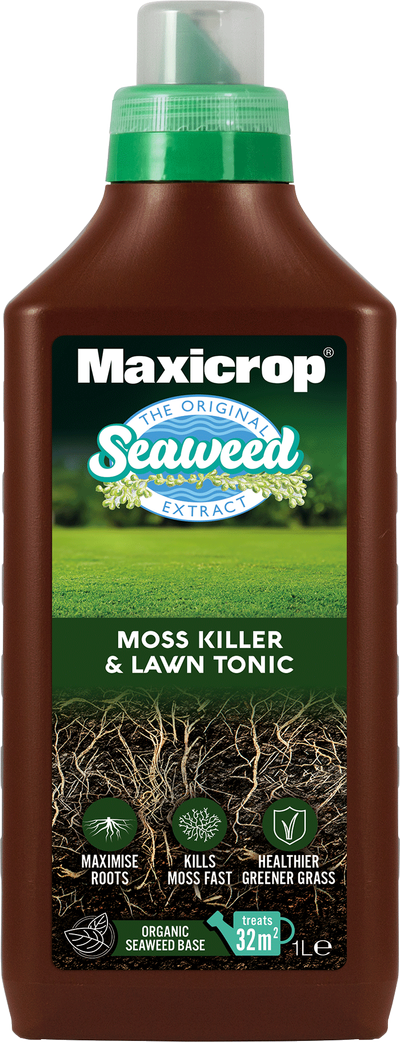
For faster, more visible results, applying a targeted treatment can be highly effective. Maxicrop’s Moss Killer and Lawn Tonic provides a powerful 2-in-1 solution. Its carefully balanced formula combines a natural seaweed base to stimulate root development and overall plant health, ferrous sulphate to blacken moss within hours, and nitrogen to promote greener, stronger grass growth. As the moss dies back and turns black, it can be easily raked out, while the lawn simultaneously receives a nutritional boost to encourage thicker growth. This approach not only removes moss but actively supports lawn recovery.
Prevention is key
Ultimately, the strongest defence against moss is a dense, healthy lawn. Feeding regularly throughout the growing season, overseeding thin areas annually, maintaining a mowing height of 2.5 to 4cm without scalping and keeping mower blades sharp all contribute to a thicker sward. A healthy lawn naturally shades out moss spores and limits the space available for invasion.
Moss is rarely the real problem - it is a sign that grass is under stress. By improving drainage, increasing aeration, adjusting watering habits and strengthening overall lawn health, gardens become far less hospitable to moss. Where it is already present, manual removal or a targeted treatment such as Maxicrop’s Moss Killer and Lawn Tonic can restore lawns quickly and effectively.
With the right care plan, even heavily affected lawns can be brought back to life - greener, thicker and more resilient than before.
For more information on Maxicrop products and expert gardening advice, visit https://www.seezon.co.uk/
Ends
Editors notes
Maxicrop® has been a trusted name in gardening for over 80 years, known and loved for its premium organic seaweed-based products that support plant growth and resilience.
Sustainably sourced from the pristine waters off the Norwegian coast, Maxicrop’s seaweed extract is rich in nutrients and antioxidants, offering a natural bio-stimulant to develop strong plant cells and boost root growth, while building resistance to disease, drought and cold.
Its hero product, the popular All Purpose Growth Stimulant, is a pure bio-stimulant with an enriched formula designed to enhance root development, nutrient uptake, and stress tolerance in plants.
The wider range features products that carefully combine this high-quality, highly concentrated seaweed base with Nitrogen, Phosphorus, and Potassium to provide complete care for a variety of garden needs, including Vegetable Growth Stimulant and Feed, Tomato Growth Stimulant and Feed, Growth Stimulant and Sequestered Iron, and Moss Killer and Lawn Tonic.
Certified organic by the Soil Association, Maxicrop provides eco-conscious gardeners with effective, sustainable solutions for healthy, thriving plants.