Historic Garden Reveals the Back Story to its ‘Jungle Book’ Years
Published:
Read Time: 6 mins
Ahead of showcasing one of the great works of late Victorian literature in musical and theatrical performance form, Levens Hall and Gardens has delved into the history books to discover what was happening in its gardens at the time of that work’s publication.
The work in question is The Jungle Book, written by Rudyard Kipling. This will be brought to life at Levens Hall, on Sunday July 19, as an outdoor musical adaptation with original songs, thanks to the inspiration of Immersion Theatre.
This is not the Disney production with which many of us are familiar, but based on the Kipling books written in 1894 and 1895. In 1895, the Levens Hall gardens had just come under the management of the seventh of 11 custodians to date – head gardener, Mr William Gibson.
With the South Lakes historic house and gardens preparing to say goodbye to current head gardener, Chris Crowder, this year, then handing the reins to its next and 12th custodian, it has taken a look back at the contribution made by William Gibson, in the years in which the Jungle Book first gained popularity.
William Gibson tended and managed the gardens from 1895, right through World War 1. The then owner of Levens Hall, Josceline Bagot, had spent time in Canada, and introduced some Canadian seedlings to the park and woodlands at this time.
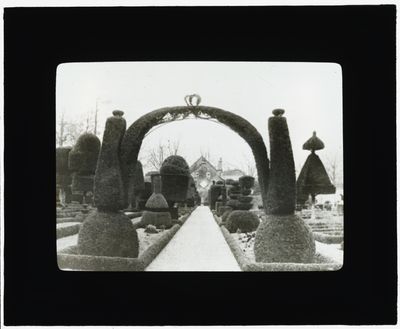
Within the gardens, there was mixed planting in the box-edged beds. Newly planted topiary was developing alongside the original topiary, dating back to 1694. Some of the new planting was the golden yew topiary that we see today, which now sits alongside the dark green yew. Some of the box figures in the gardens also date from this time. Within a Country Life article published in 1899, a parterre is also visible.
Around 1900, Mr Gibson would also have overseen the planting of the larger gingko tree within the Topiary Garden, and introduced the older fruit trees that can be seen in today’s Orchard.
This seventh custodian of the Levens Hall gardens was deemed an expert in the art of topiary, as evidenced when he published his 1904 work, ‘The Book of Topiary’. This offered both practical topiary advice and technical guidance.
He may have been on-hand to welcome an acclaimed figure of the day - Gertrude Jekyll. She certainly described the garden, as it existed in 1906, in the publication, ‘Some English Gardens’, which also featured Samuel Elgood watercolours. The effects of light descending on the clipped evergreens was described as “a delight to the trained colour-eye.”
She also detailed the experience still available to visitors to Levens Hall and Gardens today, saying “the trees, clipped in so many diversities of form, offer numberless planes and facets and angles to the light, whose play upon them is infinitely varied.” The notion that shaping the trees into “fantastic forms” was “childish”, was also dismissed. As she said, “Would that all gardens were childish in so happy a way!”
Thanks to an audio recording made by William Gibson’s son Charlie, quite a lot is known about the garden in this original ‘Jungle Book’ era. Ten men worked with William, five as labourers and five, described as “old gentlemen” working in the Bothy. They started work at 6am, ate breakfast at 8.30am and had a one-hour break for lunch. Their working day ended at 5.30pm and a little earlier in winter and on Saturdays. They worked on Boxing Day and bank holidays.
Charlie described how his father kept everything “spick and span” in the gardens, making it a “showpiece.” The five main men who worked with him either worked in one of the greenhouses, or in the potting shed. Here, bedding plants, stunning carnations, melons and grapes were grown.
With the then owners living away from the Levens Hall property, Mr Gibson regularly put fresh produce from the estate onto the train to London. Potatoes, peas and food in season all travelled down the track.
The Levens Hall lawns meanwhile were mowed by Jessie the horse, fitted with leather shoes and pulling a lawn mower no man was strong enough to pull. She mowed and rolled both the lawn and all of the grassed paths around the gardens.
The kitchen garden was trenched throughout winter and all leaves raked up in autumn, with not one leaf remaining to be seen. All were turned into leaf-mould, not touched until it was five years old.
This was the time when, thanks to Charlie, we know that the Levens Hall garden had begun to open to the public, but only on Thursday afternoons. Visitors had to go to the yard outside Beaumont’s Cottage, beside the topiary garden, and wait to be seen. Mr Gibson would then take them on a tour. Apparently, two or three hundred people arrived on a Thursday afternoon, many by horse-drawn charabanc.
Upsettingly, this team of gardeners was split up by World War I, following a recruitment meeting in Levens village on September 3, 1914. All of William’s younger men headed to war. Poignantly, only one, a gardener named Gerald, returned.
Throughout the First World War, the gardening efforts continued but had to be carried out by William, a lady from Windermere and one from Stoke-on-Trent, plus two or three official land army girls. These temporary ‘staff’ worked alongside his older gentlemen. Another man – Joe Penny – was also brought in ‘out of the woods’.
Having seen Levens Hall through this tricky war period, and probably moved by the break-up of his original team, William Gibson left and became a market gardener. He later became a jobbing gardener in Lancaster.
This delve into the Victorian past by Levens Hall and Gardens certainly offers a backdrop to one of the period’s great works, showing how this was a period of great change, the opening up of travel and the turmoil of war. Having the joy of reading about the exotic life of Mowgli must have been a great pleasure for those living through all of this.
Visitors who attend the Jungle Book production at Levens Hall and Gardens on July 19, can ponder all of this history within the gardens and reflect on the contribution of the custodians of the gardens, including Mr Gibson. The doors open at 4.30pm on the day, for a performance starting at 5pm, on the lawn. Suitable weatherproof clothing, plus cushions and rugs for seating, should be brought along, as Levens Hall and Gardens provides a little bit of the jungle vibe.
Tickets for the event are still available, via the Levens Hall and Gardens website, at www.levenshall.co.uk
Ends
Editors notes
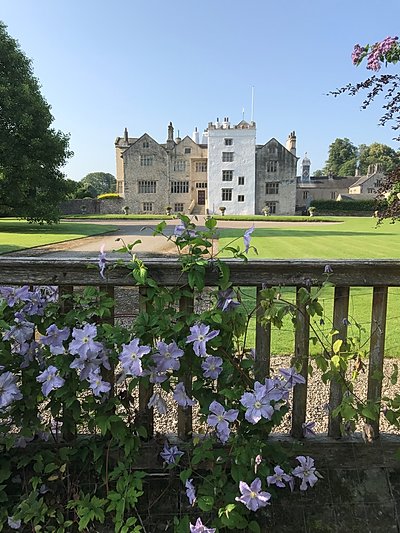
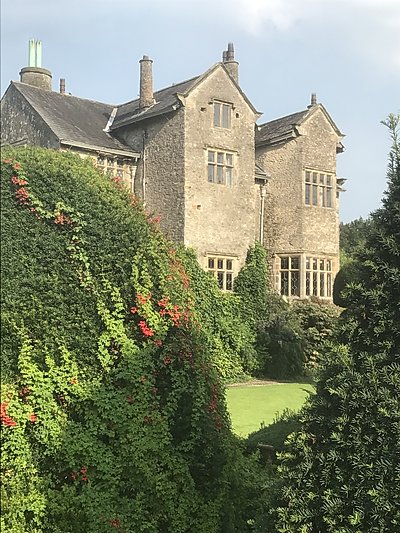
Levens Hall & Gardens is a historic house in the South Lakes, Cumbria, close to Kendal and home to the world's oldest topiary gardens, dating from 1694, created by French garden designer, Guillaume Beaumont. The Hall is a stunning Elizabethan house built around a 13th century pele tower and has close links to the Duke of Wellington, as well as various items which once belonged to him and Napoleon Bonaparte. Levens Park is home to the rare Bagot goats gifted to the Bagot family and a place in which to stroll and enjoy nature. Levens Kitchen is the contemporary new cafe, full of delights for cake lovers and foodies alike.