Sussex Community Foundation uncovers severe health challenges across county
Published:
Read Time: 4 mins
Brighton & Hove has the highest suicide mortality rate in Sussex, men in Hastings live two years less than the national average and Eastbourne has high rates of hospital admission for self-harm.
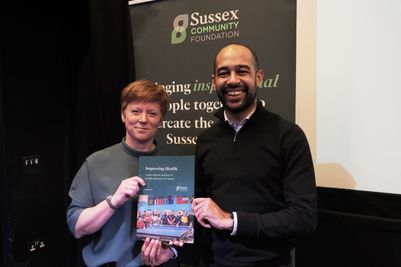
These were just some of the findings in a report from Sussex Community Foundation which revealed the hotspots for health and wellbeing issues across the county.
The Improving Health Report highlighted that mental health needs across the county were higher than average and getting worse, while problems were concentrated in urban and coastal areas listed in the top 10% of the most deprived areas in England.
This report will help the Foundation direct funding where it is needed most and will inform businesses and philanthropists who wish to support communities across Sussex.
The report was delivered in partnership with Oxford Consultants for Social Inclusion (OCSI) and was launched at the Towner in Eastbourne on Tuesday 17 February.
The Foundation shone a spotlight on the significant pressures on mental and physical health services, with urban and coastal communities struggling the most.
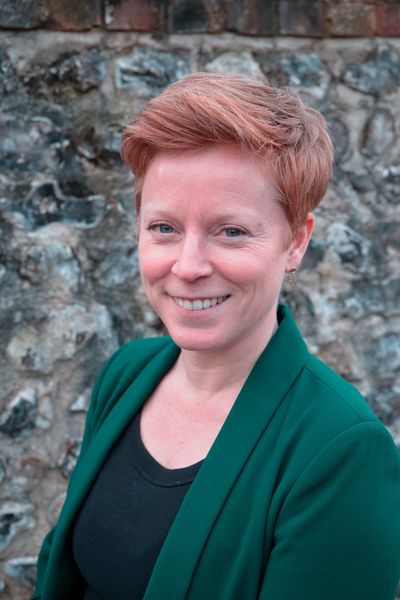
Foundation head of philanthropy and development Vicky Booth said: “We exist to make Sussex a fairer and more equal place by connecting people who care with causes that matter.
"This data-led report will enable us to have the biggest impact in the areas which need it the most, working together with charities to improve the health and wellbeing of our local communities."
The report found multiple health problems were particularly impacting coastal communities. Areas with the most severe health challenges in Brighton included Coldean, Moulsecoomb North, Hangleton, Hollingdean and Moulsecoomb, Kemptown and Whitehawk; in Hastings they were Broomgrove, central Hastings, Central St Leonards, Hollington and Ore; in Eastbourne they were Hampden Park, Langney East and Pier; in Arun it was Bognor Regis Central, South Bersted and Wick and Toddington and finally Rother in Bexhill.
These areas are all in the top 10% of the most deprived in England, with 80,000 of the Sussex population living in these hotspots.
People living in Hastings, Eastbourne and Brighton & Hove were found to be dying prematurely as a result of largely preventable conditions, all with rates more than double the baseline for England.
Long term health conditions and disability amongst working age adults represented a significant and growing challenge in Sussex. Kemptown in Brighton & Hove stood out as the most affected, with nearly one in three people under the age of 65 claiming disability allowance.
Hastings ranked highest in Sussex for nearly every mental health indicator measured, while Eastbourne also fared poorly, with a high prevalence of depression.
Brighton & Hove had the highest suicide mortality rate in Sussex with 79 per 100,000, comparing to a national average of 48.
The report revealed young people in disadvantaged areas were facing disproportionately high levels of caring responsibility, disability and mental health need.
Bexhill Central (6.19%) and areas of Wealden (Pevensey) and Brighton (Hollingdean and Moulsecoomb) stood out with the highest proportion of child carers in the region - reaching more than 5%, compared to just 1.1% nationally.
Josh Babarinde, MP for Eastbourne said: "This vital report exposes the stark health inequalities facing Sussex residents. In part of my own patch of Eastbourne and beyond, our communities experience preventable deaths at twice the national rate.
“These aren't just statistics, they're our neighbours struggling to access healthcare, young carers struggling to stay afloat and families facing mental health crises.
“We must direct resources to our coastal communities where deprivation and poor health intersect most acutely, supporting the local charities doing crucial work while demanding better access to primary care and mental health services."
Dr Tim Fooks, High Sheriff of West Sussex: “Sussex Community Foundation’s Improving Health Report gives us a clearer, deeper understanding of what shapes health across our communities and neighbourhoods.
“At the heart of tackling these challenges is community: local knowledge, local action, and people, especially those with lived experience, coming together to support one another and drive lasting change.”
For more information, visit https://sussexcommunityfoundation.org/
Ends
Editors notes
For further information, please contact:
Harmony Kinnear or Alex Hankinson
Midnight Communications
T: 01273 666 200
About Sussex Community Foundation
Sussex Community Foundation is a registered charity that exists to make Sussex a fairer and more equal place. We do this by enabling local people to support local causes, making grants to small charities and voluntary groups working in communities across Sussex.
We use national and local data to focus our impact on four key funding priorities where we believe we can make the biggest difference: tackling poverty, improving health, reaching potential and acting on climate.
Through our philanthropy advice, we help to match our supporters’ aims with the many small, effective local charities offering solutions to local issues. Together we’re helping to create a Sussex where people and communities thrive.
Since 2006 we’ve raised £48 million, given grants of £35 million to over 3,000 organisations and £26 million is in endowment to provide for future generations across Sussex.
Contact details
Website: https://sussexcommunityfoundation.org/
Email: info@sussexcommunityfoundation.org
Phone: 01273 409 440
Address: Sussex Community Foundation, 15 Western Road, Lewes BN7 1RL
Sussex Community Foundation Improving Health Key Findings
- Rural Sussex faces health access issues, while urban areas struggle with service availability.
- Hastings and parts of Worthing, Arun and Chichester have the highest emergency hospital admissions in Sussex.
- Kemptown in Brighton and Hove has nearly one in three people under 65 years (31.7%) claiming disability benefits.
- Brighton & Hove and parts of West Sussex show the highest cancer incidence, exceeding the England average.
- Depression is most common in Adur and Worthing.
- Hastings and Eastbourne face particularly acute mental health challenges, with the highest prevalence of serious mental illness.
- Neighbourhoods in Brighton & Hove – along with other coastal areas in Hastings, Arun and Lewes - have some of the highest self-harm hospitalisation rates in Sussex.
- Brighton & Hove has the highest suicide mortality rate of all Local Authorities in Sussex, notably above the average for England.
- Unpaid care is highest in Hastings, Eastbourne and Rother.
- There is a higher proportion of child carers in Hastings, Eastbourne and Worthing, above the England average.