Mushroom Foraging Without the Fear: A Beginner’s Guide to Britain’s Wildest Autumn Harvest
Published:
Read Time: 4 mins
By Jim Parums, foraging expert at Woodlands.co.uk
Autumn is when Britain’s woodlands suddenly become a treasure hunt, with mushrooms appearing almost overnight beneath trees, among leaf litter and on fallen timber. But while the idea of collecting wild mushrooms can be exciting, for many first-time foragers it comes with one major concern: how do you know what’s safe to eat?
Mushroom foraging can look incredibly complicated when you open a guidebook and see page after page of different fungi. But you don’t need to know everything to get started. Think of it as learning a language – learn a few words first, get comfortable with them and gradually build your vocabulary.
The biggest mistake is rushing to identify and eat something simply because it looks like a mushroom you recognise. Good foraging is about developing familiarity, not finding a quick answer.
For anyone keen to give mushroom foraging a go this autumn, I recommend starting with a small number of species that are distinctive, relatively common and useful in the kitchen.
Jelly Ear – The Easy Starter
One of the more approachable fungi for beginners and is particularly associated with dead or dying elder trees. Its distinctive, rubbery texture and ear-like appearance make it an interesting introduction to wild mushrooms.
It is often found after periods of wet weather, when its translucent brown fruiting bodies become swollen and easy to spot. In the kitchen, its slightly crunchy texture works particularly well in stir-fries, soups and broths, where it readily takes on the flavours around it.
Chicken of the Woods – The Showstopper
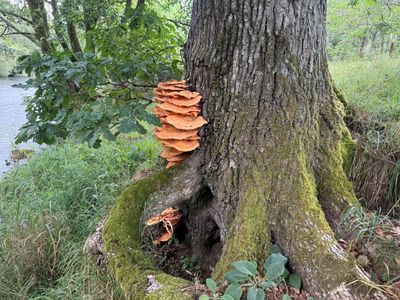
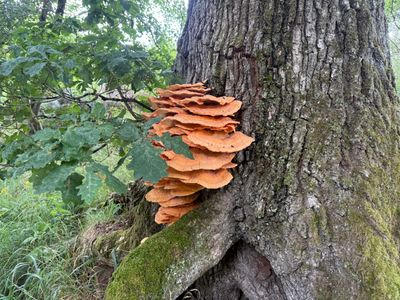
Bright yellow and orange shelves growing from tree trunks, chicken of the woods is hard to miss. It is particularly associated with broadleaf trees and can produce substantial quantities when conditions are right.
It’s probably one of the mushrooms that gets people most excited because you can spot it from quite a distance, but don’t let the confidence of finding something distinctive turn into overconfidence. You still need to make absolutely certain of what you have before eating it.
Young, tender pieces are particularly good torn into strips and pan-fried with butter, garlic and herbs, or used as a meaty addition to pasta, curries and tacos.
Porcini and Boletes – The Gourmet Goal
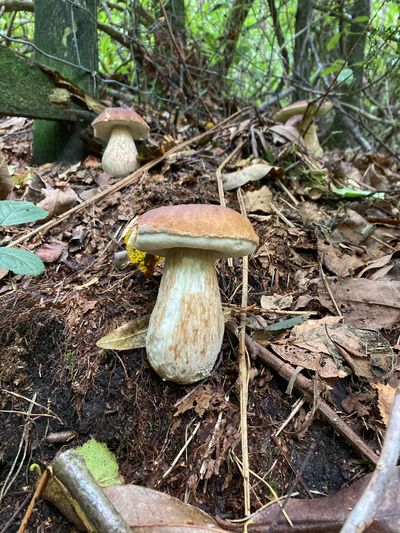
Also known as penny buns, Porcini are among Britain’s most sought-after edible mushrooms and belong to the bolete family. Boletes are a useful group to learn because their pores, rather than gills, provide an important identifying feature. But, don’t assume that because something looks like a porcini it is one, learn the characteristics of the whole mushroom – including what’s underneath the cap, the stem, where it is growing and what trees are around it.
Porcini are delicious simply sliced and fried in butter with garlic and parsley, while dried specimens can add a rich, earthy depth to risottos, sauces and gravies.
Shaggy Inkcap – Eat It Fresh
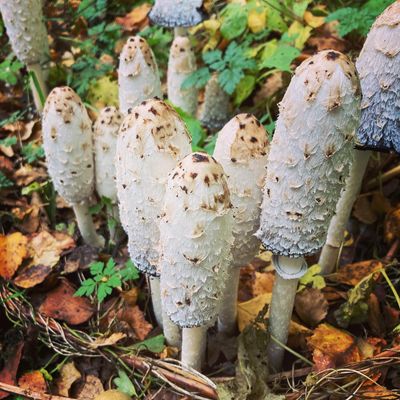
Another distinctive mushroom that can be found in grassland, woodland edges and other habitats. Its tall, white, shaggy caps make it relatively easy to recognise when young.
The catch? They don’t hang around. Once mature, the cap begins to dissolve into a characteristic black, inky liquid, meaning this is a mushroom for the kitchen rather than one to collect and leave sitting in a basket all day.
Young specimens are best cooked promptly and simply – try frying them in butter with garlic and black pepper while the caps are still firm and white.
Five Rules for New Mushroom Foragers
1. Learn a handful, not hundreds
Forget trying to memorise every mushroom in Britain. Pick a few beginner-friendly species and become genuinely familiar with them before moving on.
2. Look at the whole mushroom
Don’t rely on colour or shape alone. Examine the cap, stem, gills or pores, size, texture, habitat and what the mushroom is growing on or near.
3. Learn where they grow
Knowing the habitat can be just as useful as knowing what the mushroom looks like. Some species have strong relationships with particular trees or types of woodland.
4. Don’t outsource identification
Apps, social media groups and online photographs can be useful learning tools, but they should never replace proper identification.
5. When in doubt, leave it out
This is the golden rule of mushroom foraging. If you cannot be completely confident of your identification, don’t eat it.
Foraging should also always be carried out responsibly, legally and with permission where required. Take only what you need, avoid damaging the woodland floor or surrounding habitat and leave plenty behind for wildlife and the fungi to continue reproducing.
Learn first, pick second and eat last. If you get those three things in the right order, mushroom foraging can become one of the most rewarding ways to experience a woodland.
Ends
Editors notes
Founded with a mission to make woodland ownership accessible and enjoyable, Woodlands.co.uk offers private woodlands for sale across the UK. The company provides resources and guidance for new owners to explore creative ways of managing their woodlands for personal and community benefit. Whether for conservation, leisure, or environmental education, Woodlands.co.uk empowers individuals to steward and protect their woodlands for generations to come.