Your Complete Guide to Using Nemasys beneficial nematodes Natural, targeted pest control for healthier gardens
Published:
Read Time: 5 mins
Nemasys beneficial nematodes are microscopic organisms that live naturally in soil. Although invisible to the naked eye, they play a powerful role in controlling a range of common garden pests, including vine weevil larvae, slugs, leatherjackets, fungus gnat larvae, and more.
Unlike chemical pesticides, nematodes work by seeking out specific pest larvae in the soil and stopping them at directly at the source. They are safe for people, pets, wildlife, and plants, and are widely used in both amateur gardening and professional horticulture.
Produced in the UK by Nemasys, these biological controls are designed for reliable, targeted pest management. By adding more of these beneficial microscopic worms to the soil, you can quickly and sustainably manage pest infestations, and here is how to get the best from them.
1. Choose the correct nematode product
Effective control depends on matching the correct nematode species to the target pest.
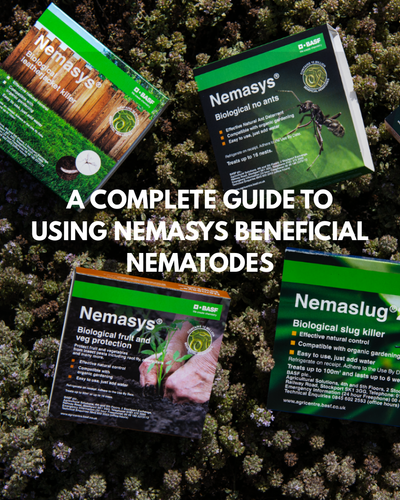
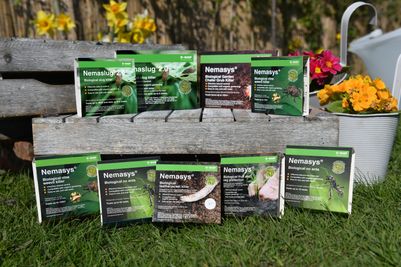
- Nemaslug 2.0 – Controls slugs before they damage young plants and seedlings
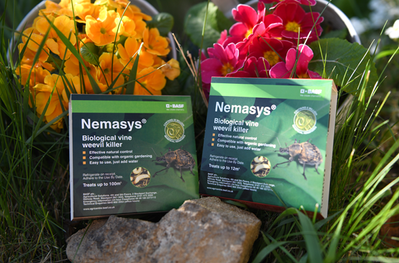
- Nemasys Biological Vine Weevil Killer – Targets vine weevil larvae feeding on plant roots in containers and borders
- Nemasys Biological Leatherjacket Killer – Reduces crane fly larvae that damage lawns
- Nemasys Biological No Ants – Helps disrupt ant colonies and encourages relocation
- Nemasys Biological Fruit & Veg Protection – Broad-spectrum control for key crop pests, including:
- Carrot root fly
- Cabbage root fly
- Onion fly
- Fungus gnat (sciarid fly)
- Cutworms
- Thrips
- Box caterpillar
- Shore fly
- Sawfly
- Codling moth
Correct identification of the pest is essential, as nematodes are highly specific and do not act as a general insecticide – they only attack their intended prey.
2. Apply at the right time
Timing is one of the most important factors when using beneficial nematodes successfully. Different pests become active at different points in the year, so treatments should be applied when the target pest is present in the soil and at a stage where nematodes can infect it effectively - usually the larval or juvenile stage.
For example:
- Vine weevil larvae are commonly treated in spring and autumn
- Leatherjackets and chafer grubs are typically targeted from late summer into autumn, when young larvae are close to the soil surface
- Slugs are most active in damp conditions during spring and autumn
- Fungus gnat larvae can be treated year-round indoors or in greenhouses
Applying at the correct point in the pest’s lifecycle gives the best possible results and helps reduce repeat treatments.
Temperature conditions
- Most beneficial nematodes work best when soil temperatures are between 5°C and 29°C, although exact requirements vary by species
- Avoid applying during prolonged freezing conditions or extreme heat, as this can reduce nematode survival and activity
- Short periods of light frost are usually acceptable, but consistently frozen soil should be avoided
Moisture conditions
- Nematodes move through moisture in the soil, so damp conditions are essential
- Water the soil before application if it is dry, and keep the area moist for at least two weeks afterwards
- Avoid waterlogged ground, as overly saturated soil can limit oxygen levels and reduce effectiveness
Time of day
- Apply early in the morning or later in the evening when conditions are cooler
- This helps protect nematodes from direct sunlight and ultraviolet exposure, which can damage them and reduce activity
- Avoid applying during the hottest part of the day, especially in summer months
4. Mixing and application
Beneficial nematodes are living organisms, so careful preparation and application will help ensure the best results.
Mixing
- Always read the product instructions fully before use, as application rates and methods can vary between nematode species and target pests
- Mix the nematodes into water exactly as directed, ensuring the solution is fully diluted before application
- Continue stirring regularly throughout use, as nematodes naturally settle at the bottom of watering cans or sprayers over time
- Once mixed, apply the solution as soon as possible rather than leaving it standing for long periods
Application tools
- A watering can with a coarse rose is ideal for borders, raised beds, pots and smaller garden areas
- Hose-end applicators or garden sprayers are better suited to larger lawns and wider growing spaces
- For tree pests such as codling moth, pump sprayers with a coarse spray setting can help apply nematodes directly onto bark or affected areas
- Avoid very fine filters, mist settings or nozzles, as these can damage or block the nematodes during application
Application technique
- Apply evenly across the entire treatment area to maximise contact with the target pest
5. Aftercare
Post-application care is essential for success – especially during the summer months
- Water lightly after application to help wash nematodes into the soil
- Continue to keep the treated area moist for the following two weeks to help the nematodes move and locate pests quickly and efficiently
6. Storage and handling
Beneficial nematodes are living organisms, so correct storage is important to maintain their effectiveness before use.
· Store nematodes in a refrigerator between 4°C and 8°C until needed
· Do not freeze them, expose them to direct sunlight or leave them in warm conditions for extended periods, as extreme temperatures can kill or weaken the nematodes
· Check the use-by date on the packaging and follow any product-specific storage advice carefully
· For best performance, apply nematodes as soon as possible after delivery or purchase rather than storing them for long periods
· Once mixed with water, nematodes should be used immediately and should not be stored for later application
· Keep packs sealed until use to help maintain moisture levels and nematode viability
7. Monitoring and repeat applications
Beneficial nematodes work naturally over time, so results are not always immediate. Monitoring pest activity after treatment can help determine whether further applications are needed.
- A reduction in pest activity is often noticeable within 7 to 14 days, although this can vary depending on soil temperature, moisture levels and the target pest
- Some pests, particularly those with long or overlapping lifecycles, may require repeat treatments during the growing season
- For ongoing infestations, additional applications are often recommended every six weeks during periods of peak pest activity
- Regular preventative treatments throughout the key season can help keep pest populations under control and reduce future outbreaks
- Continue to check plants, lawns and soil for signs of fresh damage, as timing follow-up applications correctly is important for long-term effectiveness.
Ends
Editors notes
Nematodes are naturally occurring microscopic worms, already present in our soil. Beneficial nematodes attack and kill targeted garden pests. They are compatible with organic farming, easy to use and can even be kept in your fridge!
Research scientists have isolated the nematodes that kill specific garden pests including Slugs, Vine weevils, Leatherjackets, Caterpillars, Codling moth and much more.
BASF’s state of the art production facility in the UK produces billions of nematodes in a form that is easily applied by gardeners. Over 20,000 different species of nematodes have been classified, although some estimates put the total figure closer to one million! BASF has the largest specialist nematode production facility in the world, growing trillions of beneficial nematodes for use in their Nemasys range of pest control products.
BASF experts are available for interviews, features and expert comment on biological pest control management, and product is available for reviews, competitions and product trials.