Prune now or regret it next year? What to cut, and what to leave alone, this autumn
Published:
Read Time: 4 mins
Wilkinson Sword Garden Tools shares the autumn pruning jobs worth tackling now - and the plants best left alone
As autumn arrives, it can be tempting to reach for the secateurs and start cutting back. But pruning at the wrong time can mean removing next year's flowers or fruit before they've had a chance to appear.
The key is knowing what to prune now, what to leave alone, and which tool is best suited to the job.
“Autumn pruning is about knowing when to cut and, just as importantly, when to put the secateurs down,” says Mark Hewett, Commercial Product Manager at Wilkinson Sword Garden Tools.
“A few well-judged cuts now can make a real difference next year, but there are plenty of plants where patience is the better option.”
The autumn pruning jobs worth doing now
1. Tidy roses and ramblers
Climbing and rambling roses can be tidied in autumn. Remove dead, damaged or diseased stems, along with branches that are crossing, rubbing or growing in an unwanted direction.
For established climbers, tie suitable new growth horizontally or diagonally to encourage flowering shoots along the stem next year. Once ramblers have finished flowering, some of the older flowering stems can be removed at the base.
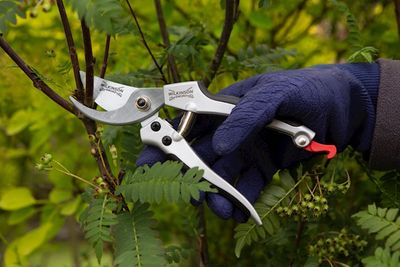
Use Wilkinson Sword Bypass Pruners for smaller stems and Geared Bypass Loppers for thicker, established growth.
2. Give deciduous hedges a final trim
If a deciduous hedge has become untidy over summer, early autumn is a good time for a final trim before winter.
Keep the aim to tidying rather than drastically reducing the hedge and maintain a slightly narrower shape at the top than the bottom so light can reach the lower growth.
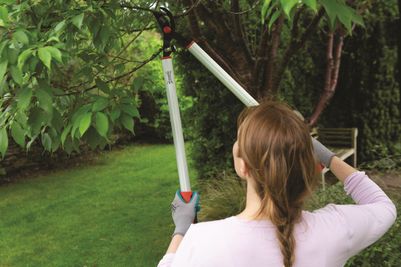
Bypass Pruners are useful for individual stems, while Bypass Loppers or Telescopic Bypass Loppers can tackle thicker or harder-to-reach growth.
3. Remove dead, diseased and damaged growth
The “three Ds” are a useful rule at any time of year. Remove branches that are dead, damaged, rubbing against other growth or showing obvious signs of disease.
Cut back into healthy wood where appropriate, and clean pruning tools between cuts when dealing with diseased material to reduce the risk of spreading problems.
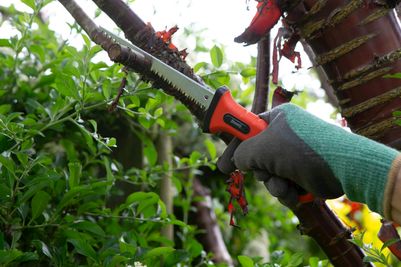
Use Bypass Pruners for smaller stems, Loppers for thicker branches and a Pruning Saw where branches are too large for loppers.
4. Tackle overgrown deciduous shrubs – carefully
Autumn through to early spring can be a good window for renovating many overgrown deciduous shrubs.
Rather than cutting everything back to the same height, start by removing some of the oldest stems at the base. For particularly neglected shrubs, renovation is best approached gradually unless you know the plant will tolerate hard pruning.
Geared Bypass Loppers are useful for thicker green branches, while Anvil Loppers can tackle older, denser wood.
5. Deal with dead or damaged branches from the ground
Autumn is a good time to inspect trees for dead or damaged branches, but significant tree surgery should be left to a qualified professional.
For smaller branches that can safely be dealt with from the ground, a high-reach tool can make the job easier without the need for a ladder. The Wilkinson Sword 2-in-1 Telescopic Tree Cutter combines a bypass pruner with a saw and extends to 2.4m.
Any large, high or difficult-to-access branches – particularly those close to power lines – should be left to a professional.
The plants to leave alone this autumn
Knowing what not to prune can be just as important.
- Spring-flowering shrubs: Forsythia, lilac, weigela and other spring-flowering shrubs produce their flowers on older wood. Wait until after flowering next year before carrying out major pruning.
- Buddleia and other late-flowering shrubs: Resist the urge to cut these hard in autumn. They're generally pruned in spring once the worst of the winter weather has passed.
- Hydrangeas: Don't automatically cut hydrangeas back in autumn. Many varieties benefit from retaining their old flower heads and stems over winter, although the right pruning approach depends on the variety.
- Lavender: Light tidying is fine, but avoid cutting hard into old, leafless wood in autumn.
- Apple and pear trees: Autumn is a useful time to remove obvious dead or damaged growth, but major pruning is generally carried out during the dormant season.
“It's very easy to think that an autumn tidy-up means cutting everything back,” adds Mark. “But a slightly untidy plant is often a better option than removing next year's flower buds by mistake. If you're not sure when a plant should be pruned, check before you cut - and make sure you're using the right tool for the size and type of growth.”
For more information about the full Wilkinson Sword garden tools range, visit www.wilkinsonsword-tools.co.uk.
Ends
Editors notes
Wilkinson Sword's mission is to provide gardening tools of premium quality and performance that help make gardening easier and more enjoyable! Reflecting 100 years of cutting excellence, the gardening tools collection comprises highly engineered quality products, including pruners, shears, loppers, stainless steel garden tools as well as a range of axes and multi-tools. Every product in the range is put through rigorous quality tests to ensure the high-quality design, durability and strength expected from this trusted brand. Every product comes with the reassuring stamp of a 10-year guarantee.