The Luxury Brits Are Overlooking: Go2Africa Reveal Where to Chase the Dark
Published:
Read Time: 5 mins
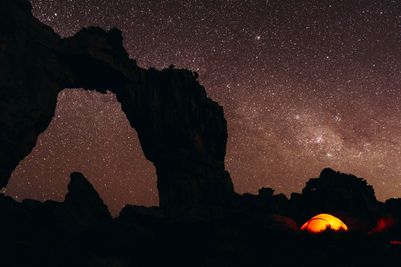
As the UK prepares to turn the clocks back on Sunday 25 October, darker evenings are likely to prompt the usual complaints about lost daylight. But a growing number of travellers are starting to see darkness differently, with worldwide searches for "dark sky travel" up 450% in the past year.* Rather than something to escape, darkness is becoming something worth seeking out.
Dark-sky travel is part of the wider rise of "noctourism", with trips planned around the night itself and safari experts at Go2Africa say the experiences go far beyond stargazing.
Why darkness is becoming a rare luxury
UK winter nights may feel long, but they are rarely truly dark. Light from street lamps, buildings and homes spills into the sky and creates a glow that hides all but the brightest stars and it reaches well beyond towns into the countryside. In fact, a nationwide survey found three-quarters of people in the UK have their view of the night sky obscured by light pollution.**
Kate McIntosh, Africa Safari Expert at Go2Africa commented: "Most of us have grown up with a sky that never gets properly dark and every year it gets a little harder to find one that looks the way it should. The first time you see the Milky Way stretched right across the sky, you understand why people travel for it. Africa is one of the best places left to experience that, with huge areas that have very few people and almost no artificial light. On safari, that darkness is a real luxury, something you can't buy at home. You head out on a night drive, sleep out under the sky or sit by the fire listening to stories and the night becomes as much a part of the trip as the day."
Where to chase the dark in Africa
For travellers who want their nights to be as memorable as their days, Go2Africa highlights three destinations where the night sky is still genuinely dark and where there's plenty to do once the sun goes down.
Namibia: the desert after sundown
Namibia is one of the least densely populated countries in the world and with so few towns across its vast desert landscapes, there is very little artificial light to cloud the sky. It is also home to Africa's first International Dark Sky Reserve. The NamibRand Nature Reserve received the designation in 2012 and holds Gold Tier status, the strictest category, after adapting all of its lighting to protect the night.
Kate McIntosh, Africa Safari Expert at Go2Africa, commented: "The sky in Namibia is vast and free of light pollution, so the stars really shine."
After dark, travellers can join night drives to look for aardwolf and bat-eared fox, sleep out on a rooftop sky bed, or stargaze with a visiting astronomer at lodges such as Sossusvlei Desert Lodge.
Botswana: the salt pans most travellers miss
Botswana is one of Africa's most sparsely populated countries and the Makgadikgadi Pans are among its emptiest corners. One of the largest salt flats in the world, the pans are completely flat, so the sky reaches right down to the horizon in every direction, with barely any artificial light to interrupt it. Most visitors head for the Okavango Delta instead, so the pans also feel far quieter.
Once the sun sets, night drives look for desert species that stay hidden by day, including brown hyena and aardvark. At camps such as San Camp, guests can also learn about research into the brown hyena, one of Africa's least studied large carnivores. Monique Wilson, Africa Safari Expert at Go2Africa, said: "The open-sided pavilions are bright and breezy and at night they let those vast, empty pans and immense starry skies take centre stage."
Kenya: the stories written in Samburu's sky
Samburu lies close to the equator, so its skies show stars from both the northern and southern hemispheres, which few safari destinations can offer. In 2025, Kenya's tourism ministry and the Kenya Space Agency chose it to launch the country's first national astro-tourism initiative, citing its minimal light pollution and clear equatorial skies.
Here, the night comes with stories. At community-owned Sarara Camp, astronomy guide Tilas Lekango explains how Samburu elders have read the sky for generations. Mars, for example, is known as Loiba Lpayani, "the star that doesn't like lazy men". Guests can also take night drives, dine out in the bush, or spend a night sleeping in the open.
Expert tips for dark sky travel in Africa
With the clearest skies arriving between May and September, now is the time to start planning for next year. Monique Wilson, Africa Safari Expert at Go2Africa, shares three tips for making the most of Africa's nights:
Time it right: "Southern Africa's drier winter months tend to bring the clearest skies. Plan around the new moon if the stars are your priority, or the full moon if you'd love to see the landscape by moonlight."
Let your eyes adjust: "Once you're out, give your eyes around 20 minutes to adjust and keep your phone away. You'll be amazed how much more you notice, whether that's the Milky Way overhead or a pair of eyes catching the spotlight on a night drive."
Pack a warm layer: "Desert nights get surprisingly cold, even after a hot day. Bring a few warm layers so that whether you're out on a night drive or sleeping under the stars, you can stay comfortable and focus on what's around you."
Find out more about dark sky holidays to Africa at Go2Africa’s blog: Africa’s Stargazing Safaris: The Continent’s Best Dark-Sky Destinations.
Ends
Editors notes
Methodology
*Search data was collected via Glimpse, comparing worldwide searches for "dark sky travel" over the past 12 months with the previous 12 months. Glimpse estimates search volumes from Google Trends data. Data correct as of 07/10/2026.
**CPRE (2023) Light pollution means most of us can’t enjoy properly dark sky
About Go2Africa
Go2Africa is Africa's tailor-made safari specialist, based in Cape Town since 1998. With over 25 years of first-hand African expertise and trusted local relationships, our Africa-Based Safari Experts combine first-hand experience, specialist regional knowledge and trusted local relationships to help travellers experience the Africa that's right for them. We are home to 21 Condé Nast Traveller Specialists, more than any other African safari company, and are also recognised by Condé Nast Traveller, Travel + Leisure and the World Travel Awards. As part of the B Corp-certified Nawiri Group, we generate funding through travel and long-term partnerships, then work alongside trusted local organisations on initiatives that strengthen landscapes, support livelihoods and help people and wildlife thrive together.