NATIONAL - Nappies, Christmas Trees and Cardboard: 43% of Installers Say Consumers Burning the Wrong Fuel Is the Biggest Chimney Fire Risk
Published:
Read Time: 6 mins
New research released during Chimney Fire Safety Week (7-11 September)
7 September 2026, UK: From nappies to Christmas trees, cardboard to household rubbish, fresh data reveals the surprising items being burned in wood-burning stoves, with 43% of chimney sweeps and installers citing consumers using incorrect fuels as the biggest chimney fire risk.
The research, released by HETAS during Chimney Fire Safety Week (CFSW) (7-11 September), also points to a worrying decline in chimney and fireplace maintenance. One in five professionals say stove owners are having their chimneys swept less often than they were five years ago, while 37.5% say one in every 10 properties they visit has never had a chimney sweep.
When asked why, 44% pointed to the cost-of-living pressures.
Led by HETAS, CFSW is an annual, national campaign delivered in partnership with Fire Kills, industry partners, and Fire and Rescue Services to raise awareness among people who use wood-burning stoves, solid fuel appliances and open fires of the dangers of chimney fires, their most common causes and how to prevent them.
England recorded 1,665 chimney fires in the year ending March 2026 according to most recent Government data, with 42% of these occurring between January and March.
Devon and Somerset (135), Dorset and Wiltshire (89), Kent (74), Hampshire and Isle of Wight (63), and Hereford and Worcester (62) registered the most chimney fires, with Greater London and Bedfordshire seeing the greatest increases with incidents doubling over the year.
Industry guidance recommends sweeping chimneys at least twice a year when burning wood, and at least once every 12 months when using smokeless fuels, regardless of the chimney type or lining.
The right fuel must also be used. In England regulations require that wood sold in volumes under 2m³ is certified as ‘Ready To Burn’ meaning it has a moisture content of 20% or less, while manufactured solid fuels must contain no more than 2% sulphur to reduce harmful emissions.
Barry Cope, CEO of HETAS said: “Using the wrong fuel and a lack of maintenance means creosote deposits which are highly combustible and can ignite when heated, can build up in the flue causing a chimney fire.”
Yet, infrequent sweeping, use of wet and unseasoned wood, and using the wrong fuel for the appliance were among the top three biggest chimney fire risks sweeps and installers encountered in customers’ homes.
Unsafe burning remains commonplace with nearly a quarter (23%) of installers saying they frequently see evidence of it.
*Nearly half (49%) have encountered customers burning pallets, cardboard or packaging (45%), and treated or painted wood (38%) in the last year. Others report the use of household rubbish (14%), Christmas trees (11%), furniture or kitchen cabinets (9%) and garden waste (9%). Most concerningly, a small minority have encountered customers burning plastics (5%) and even nappies (3%).
Stephen Bull, 66, from Cirencester, Gloucestershire, is one such resident who experienced the dangers of burning the wrong fuel.
“It was the afternoon of Christmas Day after I’d been for a walk, leaving the family at home watching television and enjoying their presents.
“When I returned, our next-door neighbours were standing outside looking at our chimney, which was showering sparks onto the front gardens. I rushed into the sitting room and could hear a loud roaring noise coming from the chimney. I immediately realised the chimney was on fire, called the fire service and evacuated everyone from the house.
“The firefighters arrived very quickly and used a heat detector to check the chimney breast in the bedroom above, which was extremely hot.
“It turned out that a large plastic gift sack had been thrown onto the fire that day by one of the children, floated up the chimney and got lodged, which ultimately caused the chimney to catch fire. It was a very frightening and alarming experience.”
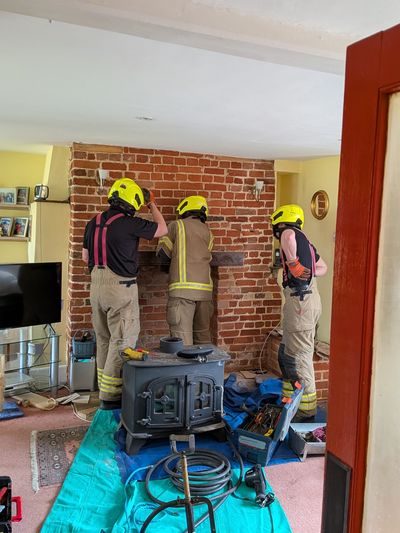
Caroline Barrett, 56, also describes the time she saw her chimney catch alight earlier this year at her Suffolk farmhouse.
“It was bizarre and very scary. The chimney breast was radiating this extraordinary heat even though the fire wasn’t lit, and hadn’t been for days, and we’d had our chimney swept just five weeks before.
“Then we noticed thick black smoke billowing out the top.
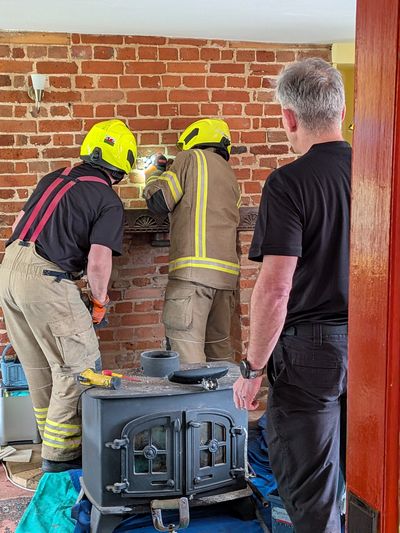
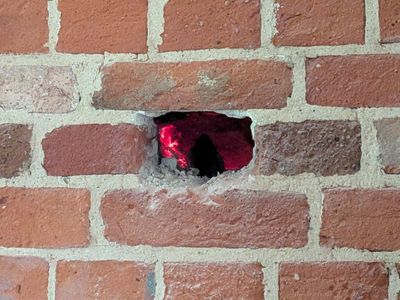
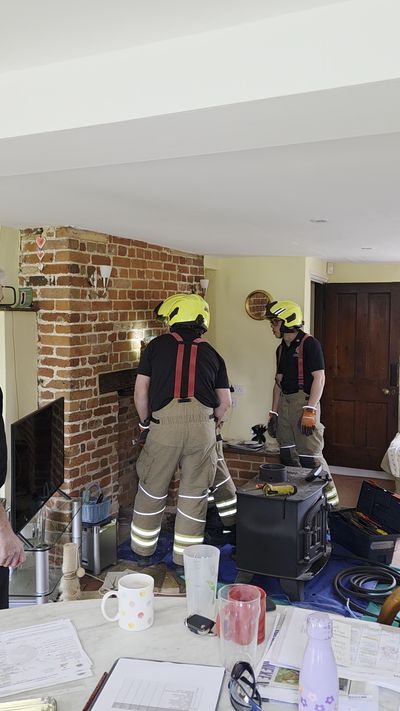
“We immediately called the fire brigade, who were brilliant. They acted quickly, removing bricks to locate the source, at which point I was worried the chimney would fall down.
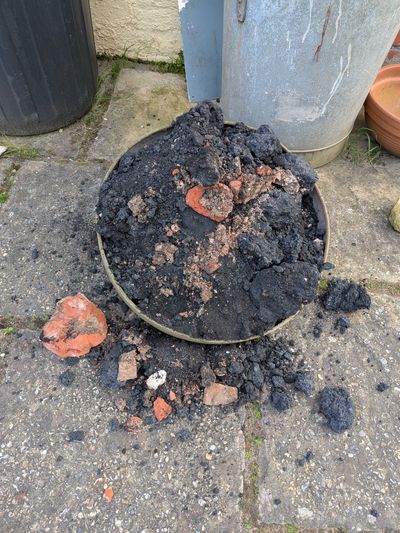
“The fire ended up being due to debris and soot caught in the gap between the outside of the flue and the chimney brick, so not somewhere you typically get your chimney swept. We now have inspection chambers on the side of the chimney for maintenance around the flue as well as inside.
“A chimney fire can happen to anyone – even us, after regularly servicing our stove and sweeping the chimney every year for 24 years. It’s therefore essential that stove owners burn responsibly, keep up with routine maintenance and know the warning signs of a chimney fire. As in our case, the danger is not always obvious flames, unusual smoke can be the first sign of a serious issue.”
Lee Wilkins, Group Manager and Head of Prevention at Suffolk Fire and Rescue Service, said:
"As autumn approaches, people will start to think about using wood burners, multi-fuel stoves and open fires to keep their homes warm. However, a poorly maintained heating appliance or chimney can result in a house fire with potentially devastating consequences.
“Regular maintenance and inspections by a qualified professional, along with the safe use of heating appliances in accordance with manufacturers' instructions, can greatly reduce the risk.
“It is also advisable to fit a carbon monoxide alarm and smoke alarm in rooms with heating appliances, and to check they are working once a month.
“Every year, Chimney Fire Safety Week serves as an important reminder that these simple preventative measures can help protect lives and homes. We are proud to support the campaign and encourage residents across Suffolk to think about fire safety as they prepare for the months ahead."
Cope from HETAS added: “With the heating season approaching, now is the ideal time to make sure your stove and chimney are ready for use. If your appliance has been sitting idle over the summer months, arranging a sweep and service before autumn arrives is a sensible first step.
“It’s also important to be confident about the fuel you are burning. If wood is sourced outside a recognised certification scheme, check that it meets the recommended moisture content, and ensure any stove installed since January 2022 meets Ecodesign standards.
“A well-maintained stove, used with the correct fuel, is an efficient and reliable way to heat your home. Taking these simple steps can help reduce harmful emissions, minimise the build-up of flammable deposits in the flue and significantly lower the risk of a chimney fire.”
Items customers admit to burning on their wood burning stove in the last 12 months
Pallets -49%
Carboard and packaging -45%
Treated and painted wood -38%
Household rubbish -14%
Christmas trees -11%
Furniture and kitchen cabinets -9%
Garden waste -9%
Plastics -5%
Nappies -3%
None of the above -29%
The service areas with the highest number of chimney fires:
Devon & Somerset -135
Dorset & Wiltshire -89
Kent -74
Hampshire and Isle of Wight -63
Herefordshire and Worcestershire -62
The service areas with the least:
Isles of Scilly -1
Cleveland -1
Tyne & Wear -10
Merseyside -11
West Midlands/South Yorkshire -14/14
ENDS
Ends
Editors notes
About HETAS research
The survey was conducted by HETAS between 23 July – 19 August 2026, obtaining 353 trade respondents, consisting of wood-burning stove installers which incorporates technicians and chimney sweeps.
*When asked, ‘which of the following, if any, have customers admitted to burning in the last 12 months?’ Respondents could select more than one option, therefore percentages do not total 100%.
About HETAS
HETAS is an independent not-for-profit organisation promoting cleaner and safer choices to trade, retailers, and consumers, for the use of biomass and other solid fuels, appliances and associated technologies.
Working with local and national government, industry experts and innovators, HETAS provides expert advice, training and clear evidence-based information to businesses, consumers and regulators. HETAS prides itself on investing surplus funds into business areas that directly contribute to safely reducing particulate and carbon emissions for the benefit of the people and the environment.