The hidden lawn pest threatening your garden this autumn and how to stop it
Published:
Read Time: 4 mins
After a record-breaking summer of heatwaves and reduced rainfall, many lawns have been left in survival mode. Brown patches, stressed grass and compacted soil have become a familiar sight across the UK. But as temperatures begin to cool and rainfall becomes more reliable, lawns have an opportunity to recover.
Unfortunately, autumn also marks the start of one of the biggest threats to healthy turf – leatherjackets. The good news is that acting early can prevent extensive damage before it starts.
The experts at Nemasys beneficial nematodes explain how to identify leatherjackets, why timing is so important, and how a simple, chemical-free treatment can keep your lawn healthy throughout autumn and beyond.
What are leatherjackets?
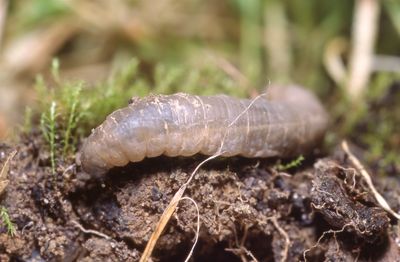
Leatherjackets are the larvae of crane flies, more commonly known as daddy long legs. While the adult insects are harmless, they lay their eggs in lawns during late summer, with the larvae hatching shortly afterwards.
Once beneath the soil surface, leatherjackets begin feeding on the roots and lower stems of grass plants. Hidden underground, they can go unnoticed for weeks while gradually weakening the lawn from below. As populations grow, the damage becomes increasingly obvious, leaving lawns patchy, thin and vulnerable throughout autumn and winter.
How to tell you've got a leatherjacket problem
Because leatherjackets spend most of their lives underground, the first signs are often seen in the condition of the lawn itself.
Look out for these common indicators:
- Yellowing or patchy grass that struggles to recover, even after cooler weather and rainfall.
- Birds, badgers or other wildlife repeatedly digging into the lawn, attracted by the larvae beneath the surface. Small holes and torn patches of turf are often a giveaway.
- A simple grub test. Water a small area of lawn thoroughly before covering it overnight with a dark sheet, tarp or piece of black plastic. The moist, dark conditions encourage leatherjackets to move closer to the surface, making them easier to spot the following morning.
Catching an infestation early gives you the best chance of protecting your lawn before significant root damage occurs.
A chemical-free approach to protecting turf
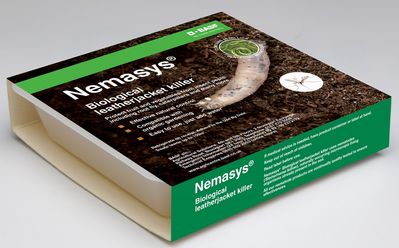
Nemasys Biological Leatherjacket Killer offers an effective, organic gardening-compatible solution to controlling leatherjackets naturally.
Rather than relying on chemical pesticides, the treatment uses naturally occurring beneficial nematodes. These microscopic organisms actively seek out leatherjacket larvae living in the soil, entering the grubs and stopping them from feeding before they can cause further damage. Once their job is complete, the nematodes naturally break down in the soil and return to the normal levels naturally found underground. As they’re a natural organism, nematodes are safe for use around children, pets, wildlife and the wider garden ecosystem.
One of the biggest advantages of using beneficial nematodes is that you don't need to wait until damage becomes visible. Applying them in late August or early autumn targets young leatherjackets shortly after they hatch, preventing them from developing into larger, hungrier larvae that can devastate lawns over winter.
Beneficial nematodes have long been trusted by professional growers, groundskeepers and sports turf managers, but they're equally easy for home gardeners to use, making professional-quality biological control accessible to everyone.
How to apply nematodes to the lawn
Applying beneficial nematodes is no more difficult than watering your lawn.
Simply mix the nematodes with water according to the pack instructions before applying them evenly across the affected area using either a watering can fitted with a coarse rose or a hose-end applicator. For larger lawns, a garden sprayer can also be used.
To achieve the best results:
- Apply when the soil is moist and temperatures are suitable, typically between 10°C and 30°C.
- Water the lawn before application if the ground is dry.
- Keep the soil moist for at least two weeks afterwards to help the nematodes move through the soil and locate the leatherjackets.
- Apply during the evening or on an overcast day where possible, avoiding strong sunshine that can reduce their effectiveness.
With the right conditions, the nematodes quickly begin searching for leatherjackets beneath the surface, getting to work where the damage actually occurs.
Why autumn protection matters
By the time a lawn shows obvious signs of leatherjacket damage, much of the feeding has already taken place. That's why prevention is far more effective than trying to repair damaged turf later in the season.
Applying Nemasys Biological Leatherjacket Killer from late August through early autumn interrupts the leatherjacket lifecycle at its most vulnerable stage, protecting grass roots before serious damage can occur. Combined with autumn lawn maintenance such as regular mowing, removing thatch and maintaining good soil moisture, early biological control helps lawns recover from summer stress and head into winter in the strongest possible condition.
A healthy lawn starts below the surface, and protecting it now means a greener, stronger lawn ready to thrive again next spring.
Ends
Editors notes
Nematodes are naturally occurring microscopic worms, already present in our soil. Beneficial nematodes attack and kill targeted garden pests. They are compatible with organic farming, easy to use and can even be kept in your fridge!
Research scientists have isolated the nematodes that kill specific garden pests including Slugs, Vine weevils, Leatherjackets, Caterpillars, Codling moth and much more.
BASF’s state of the art production facility in the UK produces billions of nematodes in a form that is easily applied by gardeners. Over 20,000 different species of nematodes have been classified, although some estimates put the total figure closer to one million! BASF has the largest specialist nematode production facility in the world, growing trillions of beneficial nematodes for use in their Nemasys range of pest control products.
BASF experts are available for interviews, features and expert comment on biological pest control management, and product is available for reviews, competitions and product trials.