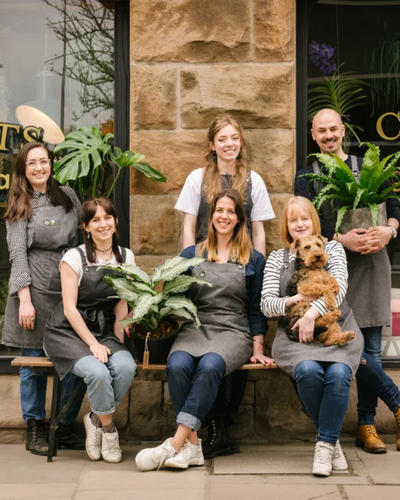
Scared to prune your houseplants? grow urban explains how to make the first cut
Published:
Read Time: 5 mins
From Monsteras reaching the ceiling to Pothos taking over bookshelves, grow urban says many houseplant owners are reluctant to prune their plants - even when a careful trim could encourage healthier, fuller growth.
There is one piece of plant care that seems to make even confident houseplant owners nervous: picking up the scissors.
According to Edinburgh-based independent plant retailer grow urban, customers regularly admit they are afraid to cut back their houseplants, with concerns ranging from killing the plant altogether to leaving it looking bare and unable to recover.
It is a hesitation that founder Graham Savage understands - particularly when people have spent months nurturing a plant and watching every new leaf emerge.
“People are generally much more comfortable pruning things in the garden than they are cutting a houseplant,” says Graham. “I think it’s because we see our houseplants every day and become quite attached to them. When a plant is finally growing really well, the idea of cutting it back can feel like you’re undoing all that progress.
“But most healthy houseplants are much tougher than they look. Pruning isn’t about damaging the plant - it’s about helping to shape it, control its size and encourage new growth.”
Why should we cut?
For many popular houseplants, particularly trailing, climbing and branching varieties, pruning can be a useful part of keeping them healthy and looking their best.
Plants such as Monstera, Pothos, Philodendron, Tradescantia and Ficus can become long, leggy or simply too large for the space they are growing in. Removing selected stems or leaves can help control their size and, in many cases, encourage fuller growth.
Graham suggests thinking of pruning in much the same way as having a haircut.
“You’re not trying to take everything off,” he says. “You’re just giving the plant a bit of shape and removing growth that isn’t helping it look or grow at its best.
“The first cut is always the hardest. If you’re nervous, start small. You can remove a couple of long stems and see how the plant responds rather than giving it a dramatic chop.”
The right tools can make pruning less daunting
For anyone lacking confidence, grow urban recommends starting with yellow, damaged or dying leaves before moving on to healthy growth.
The tools used can make a difference too. Old or blunt scissors can crush rather than cleanly cut a stem, leaving a ragged cut that can take longer to heal. A sharp pair of pruning snips gives much greater control, particularly when working with the finer stems and leaves of indoor plants.
“For houseplants, I like tools that feel precise and comfortable to use,” says Graham. “You want to feel like you’re in control of where you’re making the cut, rather than wrestling with a pair of scissors.”
The Niwaki Higurashi Snips, Niwaki Garden Snips and Niwaki Mainichi Snips are all excellent options for clean, accurate pruning. For a houseplant-specific option, the Botanopia Good Snips are designed for trimming indoor plants, cuttings and finer stems.
It is also important to keep your tools clean, especially if you are cutting away diseased or damaged growth. The Niwaki Mini Clean Mate is a useful way to clean sap and residue from blades, helping keep your tools in better condition.
The first cut doesn't have to be dramatic
With trailing plants such as Pothos and Philodendron, cutting just above a node - the point where a leaf joins the stem - can encourage new growth and also provides the opportunity to propagate the cutting.
“Take your time and look at the plant before you cut,” says Graham. “Think about the shape you want it to have and take a little off at a time. You can always make another cut, but you can’t put the stem back once it’s gone.”
There are some plants where more caution is needed. Palms, many cycads and plants that grow from a central crown should not be cut back in the same way as branching or trailing plants. With these, it is generally better to remove only fully dead or damaged leaves.
Pruning can give houseplants a new lease of life
The benefits of pruning go beyond simply making an overgrown plant look tidier. For suitable plants, it can help control size, encourage bushier growth, remove damaged or tired foliage and create cuttings that can be propagated into new plants.
For most houseplants, dead leaves can be removed throughout the year, while more substantial pruning is best saved for spring or summer.”
“Houseplants aren’t delicate ornaments,” adds Graham. “They’re living plants, and they’ve evolved to cope with damage and put out new growth. We sometimes give them much less credit for their resilience than they deserve.
“If your plant is getting too big, too leggy or a bit untidy, don’t automatically think you’ve done something wrong. Sometimes it just needs a little trim.”
For more houseplant advice and indoor plant care products, visit growurban.uk.
Ends
Editors notes
Notes to editor
For media enquiries, including high-res images, expert comment and product samples contact Fay Clarkson at Honest Communications on fay@honestcommunications.co.uk.
About grow urban
grow urban is an independent plant and garden retailer founded in Edinburgh in 2019.
From its shop in Edinburgh's New Town, grow urban offers a carefully chosen collection of houseplants, outdoor plants, plant pots, gardening tools and botanical gifts, available both in-store and online for delivery across the UK. Every product is thoughtfully selected by grow urban's knowledgeable team of Plant Gurus for its quality, design and usefulness, with a focus on helping people enjoy plants and gardens with confidence.
Every online order is hand-picked and packed from the Edinburgh shop with the same care and attention the team would expect when placing an order themselves.
Graham Savage is the founder of grow urban. He has more than 15 years’ experience running independent businesses, as well as a background in advertising and digital marketing. At grow urban, he brings those strands together with a strong interest in houseplants, plant and consumer trends, and the changing ways people choose, grow and live with plants at home.