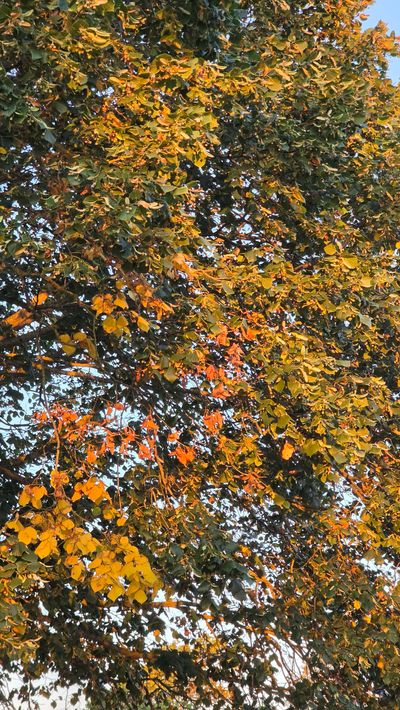
False Autumn: Don't Write Off Britain's Trees Just Yet
Published:
Read Time: 4 mins
Early leaf fall may look alarming, but Britain's trees are deploying a remarkable survival mechanism to cope with summer drought, says woodland expert Anton Baskerville.
With golden leaves already crunching underfoot and woodland floors resembling October rather than August, many people are asking the same question: is something wrong with Britain's trees?
Across parts of the country, trees have begun shedding leaves weeks before autumn would normally arrive. But according to woodland expert Anton Baskerville of Woodlands.co.uk, this striking seasonal illusion, often known as "false autumn" is not necessarily a sign that trees are dying. In many cases, it is evidence of an extraordinary survival strategy.
"When a tree experiences prolonged drought, it has to make difficult decisions," explains Anton. "Leaves are incredibly expensive for a tree to maintain because they constantly lose water through transpiration. If the roots simply can't draw enough moisture from increasingly dry soil, shedding some leaves is one way of reducing water demand and protecting the rest of the tree."
Rather than continuing to support every leaf, a stressed tree effectively begins shutting down some of its most water-hungry systems. The result is the familiar sight of prematurely yellowing, browning and falling leaves that can make parks, gardens and woodlands feel as though autumn has arrived months early.
But importantly, not every tree responds in the same way. Walk through a woodland during a drought and the patchwork effect quickly becomes apparent. Mature oaks growing in deeper soils may remain remarkably green, while younger birch or shallow-rooted trees nearby can already be losing leaves. Trees growing beside streams, in shaded hollows or in richer soils may look completely different from those only a few metres away.
"That's one of the fascinating things about woodland ecology," says Anton. "People often look at a whole wood and think it's either healthy or unhealthy, but it's actually thousands of individual responses happening simultaneously. Species, age, root depth, soil type and even tiny changes in the landscape all influence how a tree copes with drought."
While early leaf fall is often a protective response, it doesn't mean drought is harmless. Repeated periods of extreme heat and prolonged lack of rainfall can weaken trees over time, particularly younger specimens that have not yet developed extensive root systems. Newly planted woodland is often much more vulnerable than established ancient woodland because young trees have shallower roots and are still becoming established in their environment.
That raises important questions about the future of Britain's forests.
The UK has ambitious plans to increase woodland cover over the coming decades, but Anton believes the conversation should be about “what kind of woodland we create”, not simply how many trees are planted.
"The resilience of a woodland doesn't come from planting millions of identical trees," he says. "It comes from diversity. Mixed native species, different ages of trees, healthy soils, natural regeneration and protecting existing ancient woodland all create ecosystems that are much better able to cope with changing weather patterns."
Rather than viewing woodland as a collection of trees, ecologists increasingly recognise it as a living community where fungi, insects, plants, birds and mammals all contribute to the health of the ecosystem. That diversity can help buffer the effects of drought, disease and other environmental pressures in ways that monoculture plantations simply cannot.
For people who own or regularly manage woodland, false autumn is often one of the first visible signs that the season is behaving differently.
“Many of the owners that have purchased woodland through us, are uniquely placed to observe subtle year-on-year changes” adds Anton. “From streams running lower than usual and increasingly dry woodland soils to differences in flowering, acorn production and how individual tree species respond to prolonged dry spells.”
Anton believes these firsthand observations are becoming increasingly valuable. "That personal connection is a large part of what draws people to buying a small woodland through Woodlands.co.uk — along with the wellbeing that comes from spending time close to nature."
Why not head out for a woodland walk this summer and see if you can notice the differences. Which trees are still green? Which have already shed their leaves? Look at the plants growing in the shade, the insects moving through the leaf litter and the tiny differences between one part of the wood and the next.
Britain's woodlands may look different this summer, but look closely and you'll see they are very much alive – and quietly demonstrating some extraordinary survival skills.
Ends
Editors notes
Founded with a mission to make woodland ownership accessible and enjoyable, Woodlands.co.uk offers private woodlands for sale across the UK. The company provides resources and guidance for new owners to explore creative ways of managing their woodlands for personal and community benefit. Whether for conservation, leisure, or environmental education, Woodlands.co.uk empowers individuals to steward and protect their woodlands for generations to come.