Lack of Carer Specific Managerial Training Costs the UK Dear
Published:
Read Time: 5 mins
One of the greatest risks to UK businesses is rooted in something missing, in the majority of workplaces - conversations between line managers and those employees among the millions who perform a role as a family carer.
Despite published statistics highlighting that one-in-seven of Britain’s employees is an unpaid carer, the majority of line managers still do not know how to recognise these workers. These employees, walking a tightrope between work and caring commitments, remain invisible and struggling, right up to the point when they hit crisis point and tumble.
So says Carers Cloud – a UK-based HR SaaS platform, purpose-built to help mid-sized and enterprise organisations identify, support and retain employees who are working carers. On the back of publishing three White Papers about this field of HR and management practice this year, Carers Cloud now wants directors to grasp the nettle and make relevant managerial training a priority. This is to both safeguard the British economy and support family carers.
Carers Cloud says the current managerial failing is not just a leadership issue. It creates a major talent retention problem and a weakness that exposes organisations to legal jeopardy.
Whilst managers can be trained in performance management, teambuilding, and disciplinary procedures, any wellbeing training they receive is totally unsuitable for those one-in-seven employees who require dedicated carer support. Typically no carer-specific training is provided, creating a ticking time-bomb in the context of the rapidly ageing population.
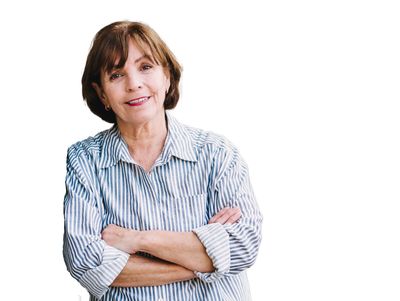
“Most wellbeing programmes are not suitable for the needs of carers in the workforce, who are often those struggling most with mental health stresses, sleep deprivation and anxiety,” says Carers Cloud’s CEO, Irene Watkins.
“Generic Employee Assistance Programmes usually only offer individual level interventions. What family carers require is system-level changes that effectively reduce work-care conflict and tackle the systemic, sustained and multi-dimensional demands on the energy and health of intensive, unpaid carers. Due to lack of managerial training and conversations that lead to change, these workers remain exposed to disruptive sleep patterns, an ever-present anticipation of loss, financial strain, emotional stress and a persistent sense of divided loyalty between family and work.”
Lacking the skills and know-how to identify carers means unavoidable stress accumulates in the workplace. Even if a manager believes someone could have care responsibilities at home, they usually worry about saying the wrong thing and are unsure what questions to ask. They frequently believe that probing situations is an invasion of personal privacy.
Too many arrangements within workplaces are informal and totally dependent on the individual line manager’s degree of empathy and sensitivity. This leads to inconsistent and inequitable outcomes in the workplace and worrying levels of legal exposure, in the light of the introduction of the 2024 Carer’s Leave Act, which sits alongside the Equality Act 2010 as the legal framework around family carers.
On the other hand, the employee may well not even realise that carer is a role they have assumed. Many just look after family members out of love and to give something back to their parents. They do not identify as carers and do not step forward to ask for help.
Others, who might recognise their carer status, do not wish to make that known, believing it will jeopardise promotion prospects, lead to them being judged unfairly, or put their job at risk.
“What we need is a workplace culture that normalises caring and which reduces the stigma attached to being a family carer,” says Irene Watkins. “Board directors should be implementing cultural changes that allow managers to have the confidence to identify carers and have a confidential and non-consequential conversation with them.
“From there, each carer needs to be equipped with personalised support and a working arrangement that the manager is capable of putting in place, to suit their individual needs. By staging interventions, in a competent and compliant way, managers can then help their employers retain their talent and, in many cases, those workers who have acquired the most knowledge and most complete set of skills within their roles. They can also help the organisation steer clear of tribunals and reputational damage.”
Recognising that managers and organisations lack the tools to reach this stage, Carers Cloud has developed digital support to assist. Its platform provides confidential wellbeing check-in tools and HRIS-integrated prompts, to allow managers to surface the true carer population, including those who would never voluntarily disclose.
From there it facilitates Whole-person Resilience Audits. These are personalised assessments which capture work, care and personal wellbeing data, to identify those employees at an elevated risk of exiting the business, at a time prior to them reaching crisis point.
The next step relates to the creation of tailored support journeys through personalise action plans that connect carers to internal company policies, EAP services, eldercare navigation resources, financial guidance and community networks.
Employers using Carers Cloud are also equipped with an HR Analytics Dashboard – a digital aide that provides anonymised, aggregated insights on carer prevalence, stress trends, absence and retention. Using this resource enables CFOs and boards to see, in financial terms, the cost and the return of providing carer support.
Finally, and most importantly, Carers Cloud provides Manager Enablement in the form of structured training, conversation frameworks and escalation guidance. This arms line managers with the right skills, allowing them to act as the retention lever that all Carers Cloud’s evidence shows they can be.
“Until organisations train their line managers in family carer identification and support, the UK economy will be held back by the huge productivity drain that comes with the presenteeism of unsupported carers, and the massive costs associated with poor retention rates and loss of talent. Failure to appreciate how to communicate with family carers is a major risk within the succession planning of many businesses,” concludes Irene Watkins.
More information about the help that Carers Cloud can provide to organisation, can be found at www.carerscloud.com
Ends
Editors notes
Powered by a proprietary identification framework and evidence-based resilience methodology, Carers Cloud proactively identifies hidden family carers within organisations and maps their full caring journey, providing personalised roadmaps to support employees at every stage. In this way, it allows employers to reduce the significant risks to the business that unidentified carers present, which include lost productivity, the loss of skills that occurs due to employee attrition, absenteeism and presenteeism, as well as legal exposures. Under the direction of caring and health sector expert, Irene Watkins, Carers Cloud is introducing groundbreaking approaches to this major issue for British business.