Why EV Range Anxiety Belongs in the Past
Published:
Read Time: 12 mins
Sally Bailey, Head of EVC Sales UK at Vestel Mobility
If there has been one persistent shadow hanging over the electric vehicle revolution in the UK, it is the spectre of range anxiety. For more than a decade, this phrase has been used as shorthand for the worry that an EV might not make it to its destination before the battery runs flat, leaving its driver stranded. The reality in the UK in 2025 is that range anxiety is now an outdated concern for the vast majority of car drivers.
The pace of change in vehicle and battery technology, the exponential growth in charging infrastructure across the UK, new ownership behaviour and even developments in roadside breakdown operations should have rendered range anxiety largely irrelevant. Yet it persists in the minds of many ICE drivers and much of the mass media surrounding EVs. Where it doesn’t exist is with anyone who has regularly driven an EV in the UK over the last couple of years.
Nowhere to charge?
One of the simplest comparisons is with traditional fuel stations. The UK has roughly 8,400 petrol stations, down from nearly 40,000 in the 1970s, when almost every village had a pump. According to ZapMap, as of the end of July 2025, there were just shy of 42,000 public charging locations across the UK. That is around five times the number of petrol stations.
The County Councils Network found that even in England’s county and rural areas, the maximum gap between two public EV charge points is around 9–10 miles. In major conurbations, that figure is obviously much lower, as London already has 25,000, or roughly one-third, of all the public charge points currently installed in the UK.
The trouble is, unless you are an EV driver actively looking for them, you probably won't know these charging areas exist. These sites avoid the main-road locations and neon signage of traditional fuel stations in favour of the greater real estate of industrial parks, shopping estates and local authority carparks. Then there are the growing number of on-street chargers, and units in hotels and leisure facilities. As an EV driver, this information will be readily available on your screen as part of the car’s information system or through an Android Auto or Apple CarPlay-linked subscription EV charge location app.
As an ICE driver, you may not notice them or even know they are there, so the perception is one of far fewer charge locations than petrol stations in the UK. The reality is quite the opposite, and the number of public charging points in the UK is growing at around 1000 per month, every month. (Source: In Aug 2025, ZapMap added 1,234 new public charging devices to its database.)
No chargers available?
At the beginning of the EV revolution, DC chargers, their software, and the electricity infrastructure supporting them were at the bleeding edge of technology, and quite frequently bled until they failed or passed out altogether. That failure or ‘not available’ rate led to the government's 2023 Public Charge Point Regulations, which mandated charger point operators (CPOs) to maintain a minimum of 99% uptime of their rapid chargers throughout the year.
Fast forward to 2025 when the technology has matured, chargers are more reliable, and the grid is being adapted to cope with the demand, CPO’s audited reports on uptime are all well above 99%. For example, the latest audited report from InstaVolt, one of the UK’s largest CPOs, noted its network of chargers was running at 99.53% availability as of June 2025.
Time to charge is still a factor in EV charger availability, of course, and that puts higher pressure on the number of chargers required per vehicle, so straight petrol-pump to EV charger point comparisons are not quite comparing apples with apples. The UK’s 8000+ fuel stations offer approximately 250,000 fuel nozzles split roughly 60/40 diesel and petrol, including truck service stations.
Conversely, the UK’s 42,000 public EV charge locations support around 85,000 actual charger points so the scales still favour liquid fuels for simple convenience. Yet that is changing daily as more consumers and businesses switch to EVs, creating greater demand for charging stations and fewer and fewer for fossil fuel pumps. In 2025 the number of public charge points is set to increase by approximately 25-38% according to Department of Transport data.
Home charging, the forgotten factor
According to government data, there are approximately 680,000 home chargers already installed in the UK, and approximately two-thirds of UK homes could support a private EV charger at home, on their driveway, garage or allotted parking space. If you are fortunate enough to be in that two-thirds, how charging makes a lot of sense financially, logistically and for sheer convenience.
Following Octopus’s lead, most providers now offer very low overnight tariffs specifically aimed at EV owners. While figures vary around the country, 8-11pence per kW hour overnight charge is the average, making fuelling an EV very cheap and very convenient; simply plug the car in when you get home and unplugging the next day.
The smallest EV chargers will deliver 7kW/h per hour, so within the typical five-hour low price window, you will receive approximately 35kW/h of energy. Parker's Real World EV Test showed that the average energy consumption for a mid-market EV was 4.0 miles per kWh, so that charge will give you around 140miles on a short overnight charge on the smallest EV charger. If your commute to work is less than 70 miles each way, you won't need a public charge point until you go on a driving holiday or a long-distance trip.
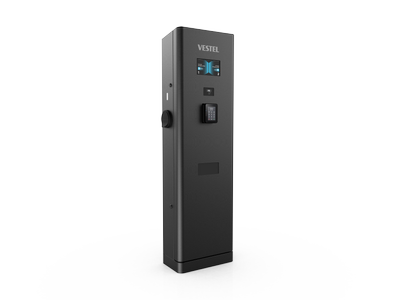
Better news still, if you have a three-phase supply at home or at work (and an EV that can handle higher AC charging rates), you can get up to 22kW of charging per hour from an inexpensive domestic EV charger, like our affordable 7/22kW Libra model. That will deliver up to 100 kWh of charge overnight within the five-hour low-rate electricity window – enough to recharge the largest battery EVs from nearly empty to full overnight – and very cheaply!
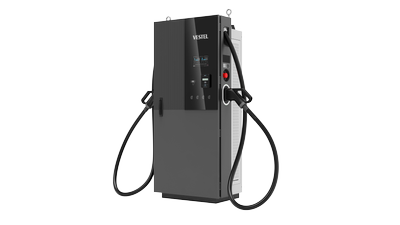
For those wanting the fastest charge at home, we offer a 40kW DC charger, the Vesper 40, that will deliver 40kW to almost any EV, new or old, as long as the house has a three-phase supply. If you need to get home, charge up for an hour or two at most, and then head out again; this solution is ideal. In either case, given that you should be able to leave home most days with a full charge, how many times do you realistically travel more than half the range of your EV in a single day and actually need a public charger? Probably very few times per year.
But it takes so long to charge?
EV battery charging speed is a whole topic in itself, encompassing battery technology, charger type, grid infrastructure, state of charge of the EV’s battery and even the weather! In reality, a lot of the negative ‘hours to charge’ rhetoric is a legacy from the first public charge points, which were far from rapid.
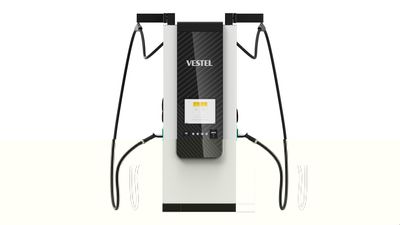
A decade ago, even so-called “fast” chargers often left drivers waiting for an hour to add a modest amount of mileage. Today, high-power DC chargers operating at 150kW, 300kW, and beyond are rolling out across the motorway network and in retail parks, capable of adding 100 miles of range in 10 minutes or less. We are already installing 720kW and 1MW DC chargers in the UK’s EV service hubs, so the limiting factor is often the car’s capacity to accept DC charge – and that is usually capped at a very respectable 250Kw/h (Tesla Model Y), which still delivers a full charge from near empty for most EVs in minutes – or about the same time it takes to fill up with liquid fuel and walk to the kiosk and pay.
The network of ultra-rapid chargers above 150kW is relatively new. Yet, advancements in vehicle battery technology, internal battery cooling systems, and even in-vehicle software are continually enabling higher charge rates through innovative battery management systems (BMS). These systems will allow charges to deliver almost everything they can until the battery gets hot, and then automatically reduce the charge rate to minimise battery stress and fatigue. Think of it as a much more intelligent system to shut off the fuel pump before you have diesel all over your shoes.
Bigger batteries and longer ranges
This transformation in infrastructure coincides with the steady rise in the capabilities of EVs themselves. The early generation of mass-market EVs rarely managed more than 100 miles between charges, and even then, only in ideal conditions. Modern electric models routinely achieve 250–300 miles in real-world driving, and premium vehicles can stretch well beyond 350 miles.
In 2025, the UK’s most popular EV is the ubiquitous Tesla Model Y, which boasts a claimed range of between 331 and 379 miles per single charge, with slightly higher figures in later models with enhanced aerodynamics. Real-world tests by various car magazines show that these figures are actually quite accurate, and user complaints largely stem from the fact that no one would ever run a car, ICE or EV, until it is entirely out of fuel (well, at least no one intentionally does!)
A reduction of 8%-10% for ‘enthusiastic’ driving styles in not uncommon, although the same or worse can be said of petrol and diesel vehicles, and there will be a dip in severe cold weather. The Norwegian Automobile Federation (whose winters admittedly average -5 to -10 degrees C!) tested several models and suggested Tesla’s reduction was around 15-20% in these extreme conditions. It also noted that the reduction was from start-up, and that on longer drives, where the battery has self-heated through discharge or clever BMS systems, the reduction over the course of the journey is much less.
Like ICE vehicles before them, stating average MPGs, EV range (essentially miles per kWh) is a key selling point of new cars. A few EV examples in mid-2025 include the Mercedes-Benz EQS 450+ with a Worldwide Harmonised Light Vehicles Test Procedure (WLTP range of 481 miles, the Volkswagen ID.7 Pro S with a WLTP of 424 miles, and the Tesla Model 3 Long range at a WLTP range of 436 miles.
According to the Society of Motor Manufacturers and Traders (UK), the average range of the entire UK market of EVs has grown by a whopping 43% over the three years to 2023 210 to 300miles), and DoE data suggest that figure is now increasing at a steady 3-4% per year. How long are most of your journeys?
In conclusion, then…
For the overwhelming majority of journeys in the UK, where the average daily mileage remains below 25 miles, the absolute range of an EV is not an issue. Long motorway slogs are still part of life for many drivers, but the current crop of ultra-efficient BEV cars, combined with the rapidly expanding high-power charging network, make them a straightforward stop barely longer or more regular than for an ICE car.
The home-charging factor tips the scales further. More than 60% of UK households have off-street parking, whether in the form of a driveway, parking bay, or garage, and this figure is far higher outside densely packed city centres. For those households, the idea of starting every day with a “full tank” of electricity transforms the ownership experience. You simply will very, very rarely even have to think about finding or using a public charger, despite the fact that they are becoming more ubiquitous and nearly as quick to use as petrol station nozzles (and far less smelly and oily than diesel ones).
For the majority of drivers in the UK, particularly those in a position to buy a new or nearly new car, the shift to EVs is more a matter of mindset than a practical concern. In reality, EVs are cleaner, greener, longer-lasting, cheaper to run, and offer superb benefits in simple convenience for many. However, it takes a while to change over 100 years of often passionate, petrol-driven personal transport, and today's range anxiety is mostly part of that stoic kickback rather than reality.
Don’t get me wrong, I am not preaching for everyone to change to EVs right now. There is still plenty of life and mileage in ICE cars, and allowing them to run their course into a slow transition to EVs is a much greener alternative than scrapping cars to upgrade. Moreover, many will not be able to afford the current entry cost of EVs until we are well into the used, second-owner or older market.
However, keep an open mind and don’t believe all the negative press about EVs, such as range anxiety. Do your research and remember the ‘why’ behind the switch to EVs.
Unlike the last century of ICE evolution, the transition to EVs is not driven purely by making personal transport more convenient, better, cheaper or faster (although in many cases EVs do). The switch to EVs is about reducing greenhouse gas emissions from the tailpipes of the 42m vehicles on UK roads. It's about gradually transitioning this legacy engine to a greener fuel, such as electricity, which the UK already generates over 50% of through renewable sources.
Boxout
Out of charge calamity?
Everyone has those “OMG I thought I would make it” moments as your car drifts quietly to a halt at the side of the road, irrespective of fuel type. The good news is that all the majority breakdown providers offer a ‘get-out-of-jail’ card for EV users too, although it doesn’t come in a five-litre plastic can:
RAC: The RAC was the first major UK breakdown provider to introduce “EV Boost” vans back in 2019. These vans carry an onboard 5 kW mobile charger (effectively like a small generator or large battery pack) that can give an EV enough charge for 5–10 miles of range to get to a proper charger. They’ve been rolling this out across much of the fleet, especially in urban areas.
AA: The AA trialled and rolled out “Freewheeling” EV-support solutions. Instead of relying solely on mobile charging, they focus more on specialist “Freewheeling hubs” that allow them to tow EVs without lifting the drive wheels (a crucial feature for many EV drivetrains). However, the AA has also deployed some vans equipped with small mobile chargers to provide a “get-you-home” top-up.
Ends
Editors notes
Vestel Mobility is a part of Vestel Group which is a renowned global leader in the field of innovation and technology. Vestel Mobility is actively contributing towards the future of transportation by specialising in automotive electronics, battery solutions, and electric vehicle (EV) chargers.
In the automotive electronics sector, Vestel Mobility excels in engineering and manufacturing advanced electronic control units (ECUs), EV powertrain components and cockpit electronics such as clusters and infotainment displays.
Vestel Mobility is also a prominent player in the battery solutions arena, producing high-quality battery packages for eBikes, telecom towers, and energy storage systems. These solutions cater to a wide range of residential, commercial, industrial and utility applications.
Furthermore, Vestel Mobility showcases its commitment to promoting sustainable transportation systems by offering a comprehensive range of EV chargers. With both AC and DC options available, Vestel aims to provide seamless and eco friendly charging infrastructure to support the growing adoption of electric vehicles.
With over 40 years of experience, a vast city-size 1.3 million m2 industrial complex, 11 offices based around the world, clientele from over 160 countries, a client-orientated mindset, and true R&D, Vestel embodies a legacy of excellence and a commitment to advancing industries at the intersection of innovation and sustainable solutions.