Woodlands.co.uk experts share simple ways to help bees this World Bee Day
Published:
Read Time: 3 mins
As World Bee Day approaches on 20 May, gardens, hedgerows and woodlands across Britain are beginning to buzz with renewed activity. At Woodlands.co.uk, our team sees first-hand how important bees are not only to woodland ecosystems, but to the wider countryside. This includes the gardens and green spaces most people use every day.
While ancient woodlands provide vital habitat and seasonal food sources, many of the most important actions to support bees can be taken right at home.
Flowers are the first lifeline
Ruth Feltham, regional manager in South East England, says the simplest way to help bees is through planting.
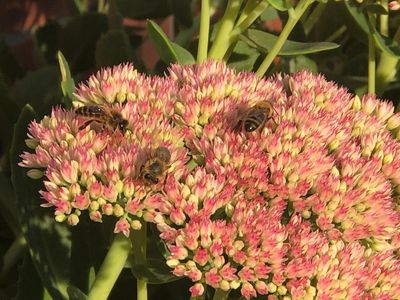
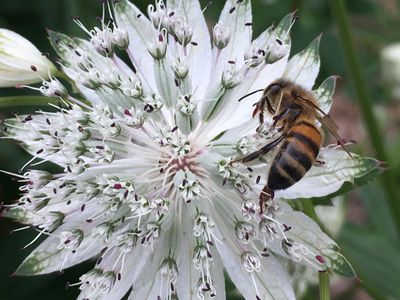
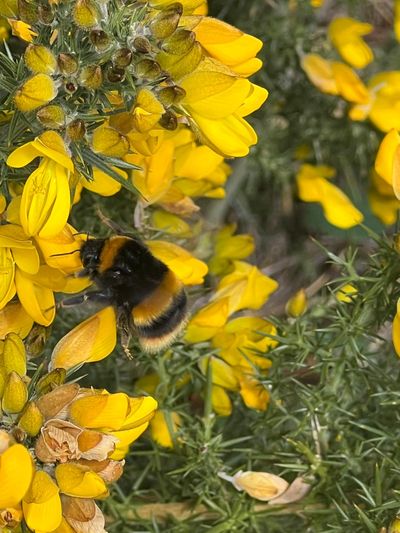
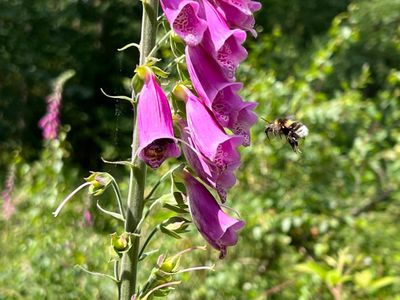
“In woodlands, we see how important flowering trees like hawthorn, blackthorn and lime are,” she explains. “But in gardens, the same principle applies. Bees are constantly searching for nectar, and a variety of flowers through the seasons makes a real difference. Try to have something flowering from early spring right through to autumn. Herbs like lavender and thyme, wildflowers, and even letting a patch of lawn grow long all provide valuable food sources.”
Letting nature take a little control
Liz Watson, local manager for Northern England, explains that one of the most helpful things people can do is resist over-tidying.
“In woodlands, fallen leaves and deadwood are essential habitats,” she says. “In gardens, it’s similar. Leaving a corner a little wild can provide shelter for insects, including solitary bees. A log pile, a patch of nettles, or simply not cutting everything back at once can make a surprising difference to local wildlife.”
Bees don’t just belong in the countryside
Dan Sharp, covering Central England, says bees can be just as dependent on towns and gardens as they are on rural landscapes.
“People often imagine bees living only in countryside or woodland, but they rely heavily on garden plants too,” he explains. “Pollinators move constantly between spaces - gardens, parks, hedgerows and woodlands - are all connected. The more varied your planting, the more likely you are to support different bee species across the season.”
Small spaces still matter
Stuart Brooking, working across Devon & Cornwall, says even the smallest outdoor spaces can help.
“A window box, a patio pot, or a small border can all be valuable,” he says. “Bees don’t need large areas, they need stepping stones across the landscape. A shallow dish with stones for landing can be just as important as flowers, especially in warmer months.”
A connected landscape
Ash Charlwood, covering North Wales, says the relationship between gardens and wild spaces is stronger than many people realise.
“Even if someone never visits a woodland, their garden is still part of that wider ecological network,” he says. “Bees move between them constantly, so every space has a role to play. One garden alone won’t change everything, but thousands of small changes absolutely can.”
Bees don’t recognise boundaries between gardens, fields and woodlands; they simply follow food and habitat.
World Bee Day is a reminder that everyone can help, even in the smallest outdoor space. Whether it’s planting flowers, leaving a wild corner, or avoiding chemicals, these simple choices all add up to healthier, more resilient pollinator populations.
Ends
Editors notes
Founded with a mission to make woodland ownership accessible and enjoyable, Woodlands.co.uk offers private woodlands for sale across the UK. The company provides resources and guidance for new owners to explore creative ways of managing their woodlands for personal and community benefit. Whether for conservation, leisure, or environmental education, Woodlands.co.uk empowers individuals to steward and protect their woodlands for generations to come.