AS "CONNECTED TO NATURE" SEARCHES RISE, ASILIA AFRICA SHINES A LIGHT ON THE LESSER-VISITED WILD SPACES OF SOUTHERN TANZANIA
Published:
Read Time: 7 mins
AS "CONNECTED TO NATURE" SEARCHES RISE, ASILIA AFRICA SHINES A LIGHT ON THE LESSER-VISITED WILD SPACES OF SOUTHERN TANZANIA
Research shows that people who spend time immersed in nature are more likely to act to protect it. With that in mind, the safari operator is spotlighting its remote camps in Ruaha and Nyerere National Parks, two of East Africa's great, lesser-visited wildernesses.
October 2026:
Searches for "connected to nature" have risen by 1,050% over the past year [1], as more travellers look for experiences that bring them closer to the natural world. Against this backdrop, Asilia Africa, part of the B Corp certified Nawiri Group, is shining a light on its camps in Southern Tanzania, where Ruaha and Nyerere National Parks offer some of East Africa's least-visited wilderness areas.
A 2026 review published in People and Nature found that people who feel more connected with nature are more likely to act in ways that support biodiversity [2], such as conservation volunteering.
Southern Tanzania offers space for exactly this kind of experience. It remains one of the region's lesser-visited areas: Ruaha is larger than the Serengeti but receives a fraction of its visitors, while Nyerere, formerly the Selous Game Reserve, is Africa's largest national park and one of its quietest.
Asilia's five camps in the region are Usangu Expedition Camp, Jabali Ridge, including Jabali Private House and Kokoko Camp in Ruaha National Park, and Roho ya Selous in Nyerere National Park. Visitor revenue, including park fees, plays a vital role in funding the protection of these remote ecosystems, where tourism numbers remain low.
Matt Starkey, Managing Director of Asilia Africa said: "Time in wild places has a way of stopping people in their tracks. In Ruaha and Nyerere, guests can walk through landscapes with few other visitors, watch wildlife gather at a waterhole or fall asleep beneath the stars, and those moments stay with people long after they return home. Research suggests that people who experience more of nature are more likely to act to protect it, and that is the connection we hope our camps in Southern Tanzania can help create, while ensuring the income from tourism reaches wilderness areas where it makes a real difference."
RUAHA NATIONAL PARK
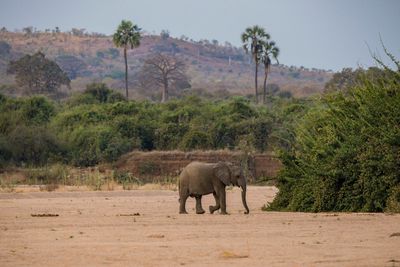
One of the largest national parks in Africa, Ruaha is home to an estimated one-tenth of the world's lions, alongside leopard, wild dog and more than 550 bird species. It is also known for some of the best walking safaris in Africa.
Usangu Expedition Camp: citizen science in the wetlands
Set in the Usangu Wetlands in the remote south of the park, this six-tent camp is designed for exploration, with walking safaris across seasonal floodplains, boating, fishing and night drives using thermal cameras. The wetlands are home to species including roan and sable antelope and wild dogs, and guests can take part in biodiversity audits and camera trapping, directly supporting the protection and rehabilitation of the ecosystem, with the Douglas Bell Information Centre explaining the conservation work. The open-fire cooking and starlit dining experiences reflect the exploratory feel of the camp and a return to the traditional safari experience. Open June to November.
Stays at Usangu Expedition Camp are priced from £626 per person per night, including full board accommodation, all house drinks (except champagne), private vehicle and guide for game drives, night drive with thermal camera, shared walking safari, star cube sleepout, shared Trails camp sleepout, shared boating and fishing, camera trapping and contributing to biodiversity audit data collection, shared transfers to/from Jongomero Airstrip, Tourism Development Levy. Minimum stay 3 nights.
Imagery here
Jabali Ridge and Jabali Private House: walking safaris in one of Africa's great lion strongholds
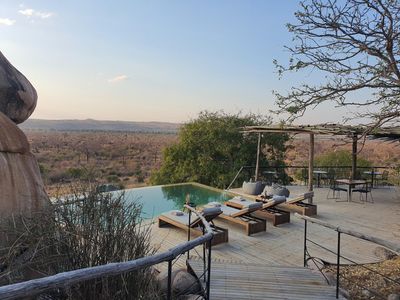
Perched on a rocky kopje near the seasonal Mwagusi River, Jabali Ridge has eight suites, a spa and an infinity pool, with game drives, walking safaris and night drives. Alongside it, Jabali Private House offers exclusive use for up to six guests with a private vehicle, guide and chef. The region is most famous for its populations of lion and elephant, and the towering baobabs dotted throughout the park. The wide variety of wildlife includes leopard, cheetah, packs of wild dog, greater and lesser kudu, sable and roan antelope, giraffe, bat-eared fox, and more, as well as some 550 bird species that call this park home. Open June to mid-March.
Stays at Jabali Ridge are priced from £664 per person per night including full board accommodation, all house drinks (except premium wines and champagne), private vehicle and guide for game drives, night drive, shared walking safari (1 Jun - 15 Feb), transfers to/from nearest airstrip, and to/from Jabali Ridge, limited laundry service, Tourism Development Levy.
Imagery here.
Stays at Jabali Private House are priced from £3,327 per unit per night (suitable for 4 adults and 2 children) including full board accommodation, all house drinks (except premium wines and champagne), one private safari vehicle and guide, game drives, night drive, walking safari (1 Jun - 15 Feb), transfers to/from nearest airstrip, and to/from Jabali Private House, limited laundry service, Tourism Development Levy.
Imagery here.
Kokoko Camp: sleeping under the stars, walking with the wild
Overlooking the dry Mwagusi riverbed, Kokoko is an exclusive-use, expedition-style camp for a maximum of six guests with a private guide. Its three tents have retractable roofs for stargazing from bed, and meals are cooked over an open fire. Between July and November guests can book walking safaris that are amongst the best available in Africa, with August and September the most reliable months. This is the peak of the dry season, when thinner vegetation improves visibility and opens up far more ground that can be walked safely, the going underfoot is firm rather than muddy, and wildlife gathers around the last remaining water in the sand rivers. The camp’s location in Ruaha National Park makes it one of the finest destinations for exciting game viewing. Wildlife can be seen gathering at waterholes dug earlier in the day by elephant, while predators wait patiently to ambush their prey. Open June to November.
Stays at Kokoko Camp are priced from £1,328 per camp per night (suitable for two guests), including full board accommodation, all house drinks (except champagne), private vehicle and guide for game drives, night drives, walking safaris, transfers to/from nearest airstrip, and to/from Kokoko Camp, limited laundry service, Tourism Development Levy.
Imagery here.
NYERERE NATIONAL PARK
Roho ya Selous: wild dogs and waterways
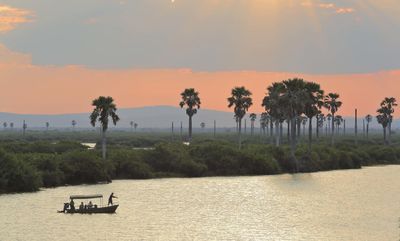
Set on a small peninsula overlooking Lake Nzerakera in the park's core game area, Roho ya Selous has eight tents and runs on 100% solar power. Nyerere is home to one of the most significant populations of wild dog, alongside elephant, buffalo, lion, leopard and more than 400 bird species. Guests explore by vehicle, on foot with armed rangers (June to January) and by boat along the tributaries of the Rufiji River. Open June to mid-March.
Stays at Roho ya Selous are priced from £950 per person per night (suitable for two guests), including full board accommodation, all house drinks (except champagne), private vehicle and guide for game drives (last-minute booking subject to availability), shared walking safari (1 June to 15 January), shared boating safari, shared fishing, shared transfers to/from nearest airstrip, limited laundry service, Tourism Development Levy.
Imagery here.
WHEN TO GO
Southern Tanzania's dry season runs alongside the northern circuit's, so the Pioneer camps could be combined with a Serengeti safari in the same trip:
- Ruaha (Jabali Ridge, Jabali Private House and Kokoko): July to November, when it is hot and dry; August and September for walking safaris; October, the peak of the dry season, for superb game viewing.
- Usangu Wetlands, southern Ruaha: October, the height of the dry season, for superb wildlife sightings and leisurely walks; June, when the park is green and lush, for birding and boating safaris.
- Nyerere: October, the peak of the dry season, for land-based game viewing; June, when water levels are high, and February to mid-March for boating and fishing.
-ENDS-
Ends
Editors notes
ABOUT ASILIA AFRICA: Asilia Africa is a pioneering travel company specialising in authentic, transformative safari experiences across East Africa. Established with a mission to make a lasting positive impact on both people and nature, Asilia operates a carefully curated portfolio of camps and lodges in Kenya, Tanzania, and Uganda in 2026, located in some of the continent’s most extraordinary wilderness areas. With over two decades of experience, Asilia combines deep regional knowledge with exceptional hospitality.
http://www.asiliaafrica.com/
For media enquiries, please contact Asiliaafrica@lemongrassmarketing.com
ABOUT THE NAWIRI GROUP: Asilia, is part of the Nawiri Group. This B Corp Certified organisation brings together responsible travel companies, local communities, and expert partners to deliver an all-inclusive, equitable and sustainable positive influence where needed across East Africa. Committed to sustainable tourism, Asilia channels resources into conservation and community development while offering guests unmatched access to wildlife, landscapes, and cultures. Each journey with Asilia is designed not only to inspire and connect travellers to the natural world, but also to create opportunities for local communities and help protect vulnerable ecosystems.
Nawiri Group - Responsible Travel. Positive Impact. Reimagined Together.
For media enquiries, please contact Nawiri@lemongrassmarketing.com We offer genuine safaris that make a genuine difference to the people and places of East Africa