From orchard to consumer: the provenance behind California Prunes’ global appeal
Published:
Read Time: 4 mins
As consumers place increasing importance on where their food comes from, provenance is becoming a more powerful quality cue for the food and drink industry.
Recent YouGov data shows that 56% of British adults want manufacturers to provide greater transparency about ingredients and sourcing[1], and the latest Eurobarometer on Food Safety in the EU[2] found that geographical origin is an important purchasing factor for 42% of European consumers. Meanwhile, a 2023 paper published in Food Policy[3] also highlighted the significant role food origin can play in consumer choice, with origin claims often acting as a cue for quality.
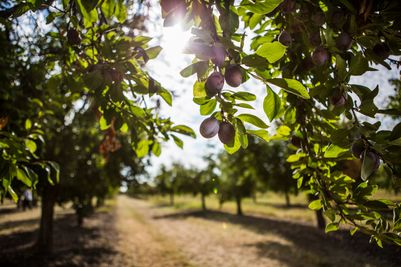
For California Prunes, provenance has long been central to global demand. Grown in over 40,000 acres spanning the Sacramento and San Joaquin Valleys, they are the result of ideal growing conditions, established and rigorous agricultural and food safety standards and, most importantly, multi-generational grower craftsmanship.
Esther Ritson-Elliott, Director of International Marketing and Communications for the California Prune Board, which represents 400 growers and 25 handlers, explains: “Exacting techniques at work in the orchards and processing plants are at the root of why California prunes are revered by the trade and consumers. For consumers it is their taste, size and versatility, and for the trade it is the product consistency and reliable year-round supply.”
For food manufacturers, retailers and foodservice operators, provenance is about more than origin alone. It provides confidence in product consistency, dependable quality and reliable year-round supply. Backed by generations of grower expertise and established production practices, California Prunes continue to offer the reassurance that buyers and customers increasingly value.
California itself leads the U.S. in growing diverse specialty crops, producing more than three-quarters of the country’s fruits and nuts, nearly half of its vegetables[4] and around 40% of the world’s prune supply. It has been home to plum orchards for more than 170 years, with a heritage that can be traced back to the legendary Petit d’Agen variety, brought to California by Frenchman Louis Pellier during the mid-19th century Gold Rush.
Today’s growers praise the state’s nutrient-rich soils, high standards and stewardship for the global success of California Prunes – and agree that the special ingredient is the desire of the entire industry to continue to deliver a premium quality prune.
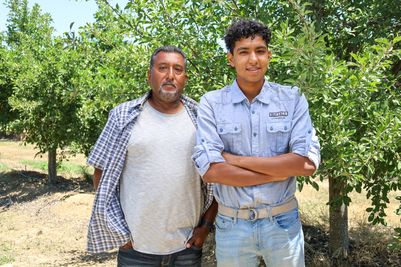
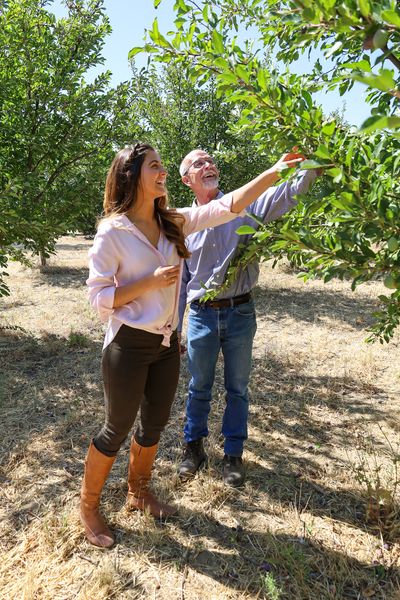
Grower Ranvir Singh, who is based in Marysville, explains: “California’s soil has got almost everything you need to grow specialty crops and also the accountability of safe food practices. We grow the safest food possible.”
Fellow prune grower Courtney Ferris Taylor, of Yuba City, adds: “You could say it is the soil or the sunshine. At the end of the day, it comes down to passion. It is the growers who live and love to farm, and who are passionate about creating a quality product.”
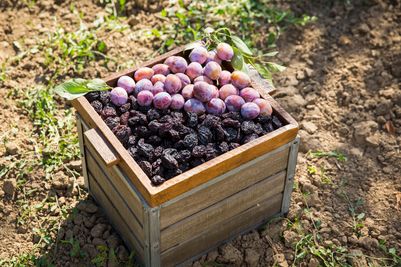
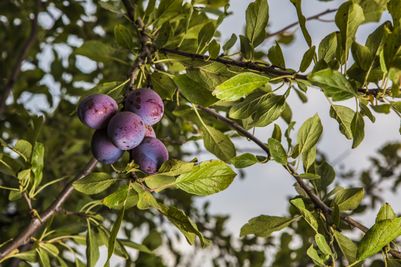
Unlike other plum varieties, California prune plums ripen fully on the tree without fermenting, while growers determine the exact time to harvest by checking the fruit’s firmness and sugar content. Mechanical tree shakers are then used to harvest the fruit, which is caught on fabric-covered frames to prevent bruising and to ensure no plums ever reach the orchard floor.
After harvesting, high-throughput optical sorting technology further supports quality control by identifying and removing foreign material, pits and damaged fruit. Prunes are then washed, sorted and placed in a single layer onto racks before being dried in climate-controlled tunnels, with every California prune harvest 100% tunnel-dried to ensure uniform shape, texture, sweetness and moisture levels. The prunes are then stored in cool storage in packing facilities before being rehydrated, inspected, packed to order and shipped to nearly 80 countries.
While the harvest is an intensive process, tending to plum trees is year-round work, with growers regulating shape to ensure each tree produces fruit of the right size, sugar content and flavour profile. Behind the scenes, the California Prune industry is also working hard to ensure its premium prunes remain on the menu for years to come, with investment in production research, innovation and technology at the heart of efforts to futureproof crops.
With harvest now just a matter of months away, Esther concludes: “California Prune growers have spent generations perfecting growing and drying processes, from managing the number of fruit on each tree to achieve the right size, sugar content and flavour, through to the drying and packing processes that protect consistency and quality. It is the California provenance and our industry’s attention to detail that gives the trade confidence in California prunes, and which gives consumers reassurance in the product they are buying.”
[1] https://yougov.com/en-gb/articles/54824-most-britons-are-concerned-about-harmful-ingredients-in-everyday-consumer-products
[2] www.efsa.europa.eu/en/infographics/2025-eurobarometer-food-safety-eu-infographic
[3] Food Policy journal (Elsevier), 2023
[4] https://www.cdfa.ca.gov/oars/
Ends
Editors notes
The California Prune Board was established in 1980 to represent growers and handlers under the authority of the California Secretary of Food and Agriculture. California is the world’s largest producer of premium prunes with orchards across the Sacramento and San Joaquin valleys. Promoting a lifetime of wellness through the enjoyment of California Prunes, the organization leads the premium prune category with generations of craftsmanship supported by California’s leading food safety and sustainability standards. California Prunes. Prunes. For life.
www.californiaprunes.net